
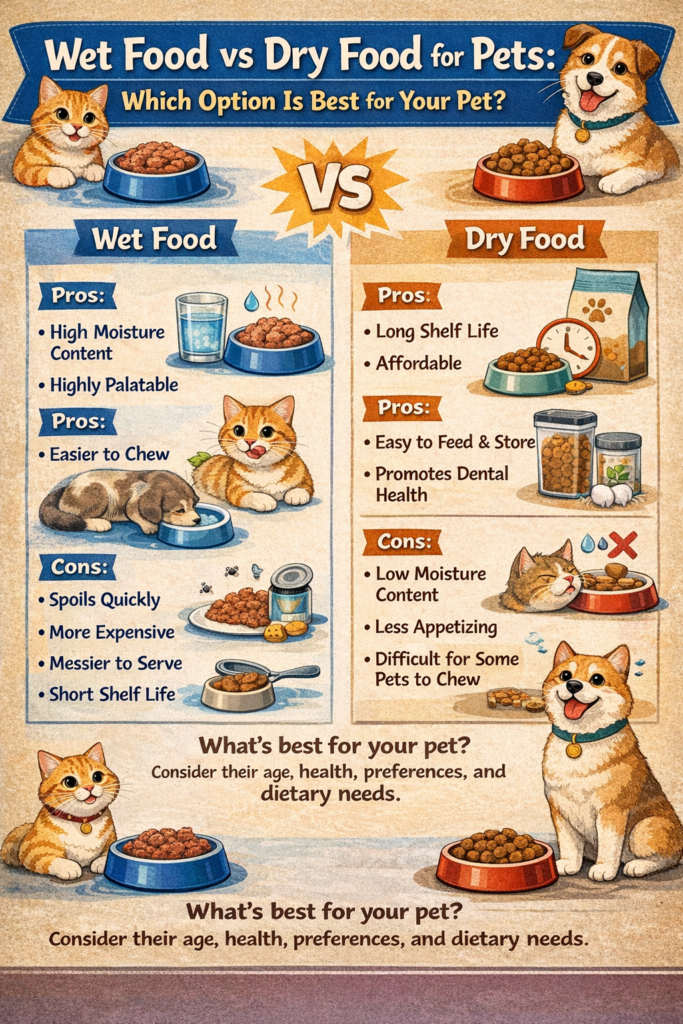
Wet Food vs Dry Food for Pets: Which Option Is Best for Your Pet?
Choosing the right food for a pet is one of the most important daily decisions any owner makes. Food affects energy, digestion, weight, coat quality, hydration, and overall health. Yet many pet owners still feel unsure when deciding between wet and dry food. Some believe dry food is the more practical option, while others think wet food is always healthier. In reality, the answer is not always simple. That is why understanding wet food vs dry food for pets is so important.
Both food types have benefits and drawbacks. Wet food can offer higher moisture and stronger flavour, while dry food is often more convenient and easier to store. Some pets thrive on one type, while others do better on a combination of both. The best choice depends on the pet’s age, preferences, health needs, activity level, and the owner’s budget and routine. A puppy, senior cat, indoor dog, or pet with dental problems may all respond differently to the same feeding style.
This guide explains wet food vs dry food for pets in a clear and practical way. It covers nutritional differences, hydration, convenience, cost, storage, dental considerations, feeding routines, and how to choose the best option for your pet. Whether you have a dog, cat, or both, this comparison will help you make a more confident feeding decision.
Why the Wet Food vs Dry Food for Pets Debate Matters
The discussion around wet food vs dry food for pets matters because feeding is not only about keeping a bowl full. It is about choosing a diet that supports long-term health and daily comfort. Many pets eat the same type of food every day for years, so even small differences in food quality and suitability can have a big effect over time.
Some owners choose food based only on price. Others choose based on advertising or what the pet seems to enjoy most at first. While those things may matter, they should not be the only factors. A food that looks convenient may not always be the best fit for your pet’s hydration needs, digestion, or appetite. Likewise, a very tasty food may not always be the most practical choice for portion control or long-term feeding.
That is why the topic of wet food vs dry food for pets deserves a closer look. Once you understand the strengths and limitations of both, it becomes easier to build a feeding plan that works.
What Is Wet Food for Pets?
Wet food is pet food with a high moisture content. It usually comes in cans, pouches, trays, or tubs. The texture may be pâté, chunks in gravy, shreds, minced pieces, or loaf-style food depending on the brand and formula.
One of the biggest features in the wet food vs dry food for pets comparison is moisture. Wet food contains much more water than kibble, which can be useful for pets that do not drink enough on their own. This is especially relevant for cats, which often have lower natural thirst habits than dogs.
Wet food is also known for its strong smell and taste. Many pets find it more appealing, especially fussy eaters, older pets, or animals recovering from illness. However, once opened, wet food spoils faster and needs more careful storage.
What Is Dry Food for Pets?
Dry food, often called kibble, contains much less moisture than wet food and is usually sold in bags of different sizes. It is one of the most common feeding options because it is easy to store, easy to measure, and often more affordable over time.
In the wet food vs dry food for pets comparison, dry food stands out for convenience. It can stay in the bowl longer than wet food, is less messy to serve, and usually costs less per feeding. It is also easier to buy in larger quantities, which many owners find practical.
Dry food comes in many formulas for puppies, kittens, adults, seniors, indoor pets, large breeds, small breeds, and animals with special dietary needs. Still, because it contains much less moisture, hydration must be supported in other ways.
Moisture and Hydration: A Major Difference
One of the biggest differences in wet food vs dry food for pets is hydration. Wet food contains a high amount of moisture, which can help pets take in extra water through meals. This may be especially helpful for cats and for pets that do not drink much during the day.
Dry food, by contrast, contains little moisture. Pets eating mainly dry food need to get most of their water from a bowl or fountain. Many dogs manage this without difficulty, but some cats are less enthusiastic drinkers. For this reason, some owners prefer wet food or a mixed feeding plan for pets that need better hydration support.
Hydration matters because it affects digestion, comfort, and overall body function. When comparing wet food vs dry food for pets, moisture content is one of the most practical areas to think about.
Taste and Palatability
Another major factor in wet food vs dry food for pets is taste. Wet food often has a stronger smell and richer texture, which makes it especially attractive to many pets. This can be useful for picky eaters, senior animals, or pets with reduced appetite.
Dry food is still enjoyable for many pets, but it may not have the same level of smell or softness. Some pets happily eat kibble every day, while others seem much more excited by wet food. Taste preference can depend on age, breed, feeding history, and even dental comfort.
If your pet regularly refuses food, the wet food vs dry food for pets question becomes more than a general preference issue. It becomes a practical matter of getting the pet to eat well and consistently.
Convenience and Daily Use
Convenience is one of the strongest advantages of dry food in the wet food vs dry food for pets discussion. Dry food is quick to pour, easy to measure, and simple to store. It can remain in the bowl longer than wet food without spoiling as fast, which makes it practical for owners with busy routines.
Wet food takes more effort. It often needs to be portioned carefully, covered after opening, refrigerated, and removed if uneaten after some time. It can also be messier around the feeding area and may need more frequent bowl cleaning.
For owners who value easy feeding and storage, dry food often wins the convenience side of wet food vs dry food for pets. However, convenience alone should not decide the issue if the pet has needs that make wet food more suitable.
Cost and Budget
Cost is another important part of wet food vs dry food for pets. In general, dry food is more affordable over time than wet food, especially for larger pets. Bags of kibble often last longer and cost less per meal than cans or pouches.
Wet food can be more expensive, particularly if it is the main or only diet for a medium or large dog. For cats and small pets, the cost difference may still matter, but it may be easier for some owners to manage.
This does not mean cheaper is always better. The most useful approach in the wet food vs dry food for pets debate is to balance budget with your pet’s actual needs. Some owners choose dry food as the base diet and add wet food occasionally for variety, moisture, or appetite support.
Storage and Shelf Life
Storage is another practical difference in wet food vs dry food for pets. Dry food is easier to keep at home in larger amounts. It can be stored in sealed containers or in its original bag inside a storage bin. As long as it stays cool and dry, it usually has a longer usable shelf life after purchase.
Wet food is more delicate. Unopened cans or pouches can be stored safely for a while, but once opened, they need refrigeration and should be used fairly soon. This can make wet food less convenient in homes where feeding schedules are irregular or where only a small amount is used at a time.
Owners who want minimal fuss often prefer dry food for this reason, but for pets that benefit from higher moisture or stronger flavour, wet food may still be worth the extra effort.
Portion Control and Weight Management
The topic of wet food vs dry food for pets also matters for portion control. Dry food is usually easier to measure quickly with a scoop or cup. This makes it popular for structured feeding routines. However, because kibble is calorie-dense, it can be easy to overfeed if owners estimate portions loosely.
Wet food often comes in clearly sized containers, which may help some owners manage meal sizes more carefully. It can also be more filling for some pets because of the moisture content. At the same time, portion planning still matters because overfeeding wet food can also lead to weight gain.
For pets that need weight control, both wet and dry food can work if the portions are managed correctly. The most important part is not only the food form, but the total calories fed each day.
Dental Considerations
Dental health often comes up in the wet food vs dry food for pets debate. Many people assume dry food always helps keep teeth clean. While kibble may create some chewing action, it should not be seen as a complete dental solution on its own.
Wet food is softer and may be easier for pets with dental problems, missing teeth, mouth pain, or older age. For pets that struggle to chew hard kibble, wet food can make mealtimes more comfortable.
The truth is that the wet food vs dry food for pets discussion should not rely too heavily on one dental myth. Good dental care usually needs more than just choosing one food texture. Regular oral care habits matter too.
Wet Food for Cats and Dogs
In the wet food vs dry food for pets comparison, wet food can be especially useful for cats, older pets, pets with low appetite, and animals needing extra hydration. It is often more attractive to eat and may be easier to chew.
For dogs, wet food can be useful for picky eating, mixing with kibble, or offering variety. For cats, it may play an even bigger role because many cats naturally do not drink as much water as owners expect. This is one reason wet food is often discussed more strongly in cat feeding.
Dry Food for Cats and Dogs
Dry food remains popular because it is convenient, budget-friendly, and widely available in many formulas. In the wet food vs dry food for pets comparison, dry food often suits busy households well. It is practical for routine feeding and works for many healthy pets.
For dogs, dry food is especially common as a main diet. For cats, it is also widely used, though some owners prefer to combine it with wet food. Dry food can work well when fresh water is always available and the pet eats and drinks comfortably.
Is Mixed Feeding a Better Option?
For many homes, the most realistic answer to wet food vs dry food for pets is not choosing only one. Mixed feeding can give the advantages of both. A pet may receive dry food for convenience and wet food for flavour, moisture, and variety.
This approach can be useful for fussy eaters, pets needing better hydration, or owners who want flexibility without switching fully to a more expensive feeding style. The main point is to keep the total diet balanced and portioned properly.
Mixed feeding is often one of the most practical solutions because it respects both the pet’s needs and the owner’s routine.
How to Choose the Best Option for Your Pet
The best answer to wet food vs dry food for pets depends on your pet as an individual. Think about age, size, appetite, chewing comfort, hydration habits, activity level, weight goals, and budget. A young healthy dog may do perfectly well on kibble. A senior cat with poor appetite may benefit more from wet meals. Another pet may do best with a combination.
The smartest approach is to focus on what helps your pet eat consistently, stay well hydrated, maintain a healthy body condition, and enjoy food comfortably.
Common Mistakes to Avoid
When thinking about wet food vs dry food for pets, avoid choosing based only on advertising, price, or what another pet owner recommends. One pet’s perfect diet may not suit another. Another mistake is switching too often without giving the pet time to adjust.
Some owners also assume wet food is always superior or dry food is always enough. In reality, both have strengths and limitations. The best decision usually comes from looking at the pet’s actual needs rather than choosing by trend.
Final Thoughts
The question of wet food vs dry food for pets does not have one universal answer. Both options can support a healthy diet when chosen carefully and fed properly. Wet food offers higher moisture, strong taste, and softer texture. Dry food offers convenience, easier storage, and lower cost over time. For many pets, a combination of both may be the most practical and balanced solution.
The key is to choose food that fits your pet’s age, health, appetite, lifestyle, and daily routine. When owners understand the real differences between wet and dry food, they can make a more confident decision and build a feeding plan that truly works.
FAQ
Is wet food better than dry food for pets?
Not always. Wet food offers more moisture and strong taste, while dry food is more convenient and often more affordable. The best choice depends on the pet.
Can pets eat both wet and dry food?
Yes, many pets do well on a mixed feeding plan that includes both types.
Is dry food enough for cats?
Dry food can work for some cats, but hydration should be watched carefully because cats often do not drink enough water on their own.
Does wet food help picky pets eat better?
Yes, many picky pets prefer wet food because of its stronger smell and softer texture.
Which is more affordable, wet or dry food?
Dry food is usually more affordable over time, especially for larger pets.