
Best Bird Food for Winter: What to Feed Wild Birds When Temperatures Drop
Winter is one of the most demanding seasons for wild birds. Natural food becomes scarce, daylight hours shorten, and freezing temperatures force birds to burn more energy just to survive. That is why choosing the best bird food for winter is not simply about attracting more birds to your garden. It is about helping them maintain body heat, protect fat reserves, and find dependable nourishment when the landscape offers less.
Many people put out random seed mixes and assume that any food is helpful. In reality, not every option gives birds the nutrition they need in cold weather. Some foods are high in energy and support winter survival, while others are low-value fillers that create waste and attract fewer species. If your goal is to support wild birds properly, you need to understand what they require during harsh conditions and how feeding habits change in winter.
The best bird food for winter is usually food that is rich in fat, oil, and calories. Birds need concentrated energy because they lose heat quickly, especially small garden birds that cannot store much body fat. A smart winter feeding routine should therefore focus on quality over quantity. The right foods can help birds make it through freezing mornings and long nights, while the wrong foods may do little more than clutter feeders.
Why Winter Feeding Matters
The search for the best bird food for winter begins with understanding the challenge birds face in cold months. In spring and summer, birds can rely more easily on insects, berries, flower buds, seeds, and plant matter. During winter, snow cover, frost, ice, and reduced plant growth make many of those sources difficult to reach. At the same time, birds need more energy to keep warm and remain active.
This creates a simple but serious problem. Birds must spend more energy when less natural food is available. For that reason, a well-managed feeding station can become an important support point, especially during severe weather. A dependable source of high-energy food helps birds reduce the amount of effort needed to find nourishment elsewhere.
When people search for the best bird food for winter, they are often really asking a deeper question: what food helps birds survive and stay healthy when conditions are hardest? The answer lies in foods that combine nutrition, digestibility, and energy density.
Sunflower Hearts and Black Sunflower Seeds
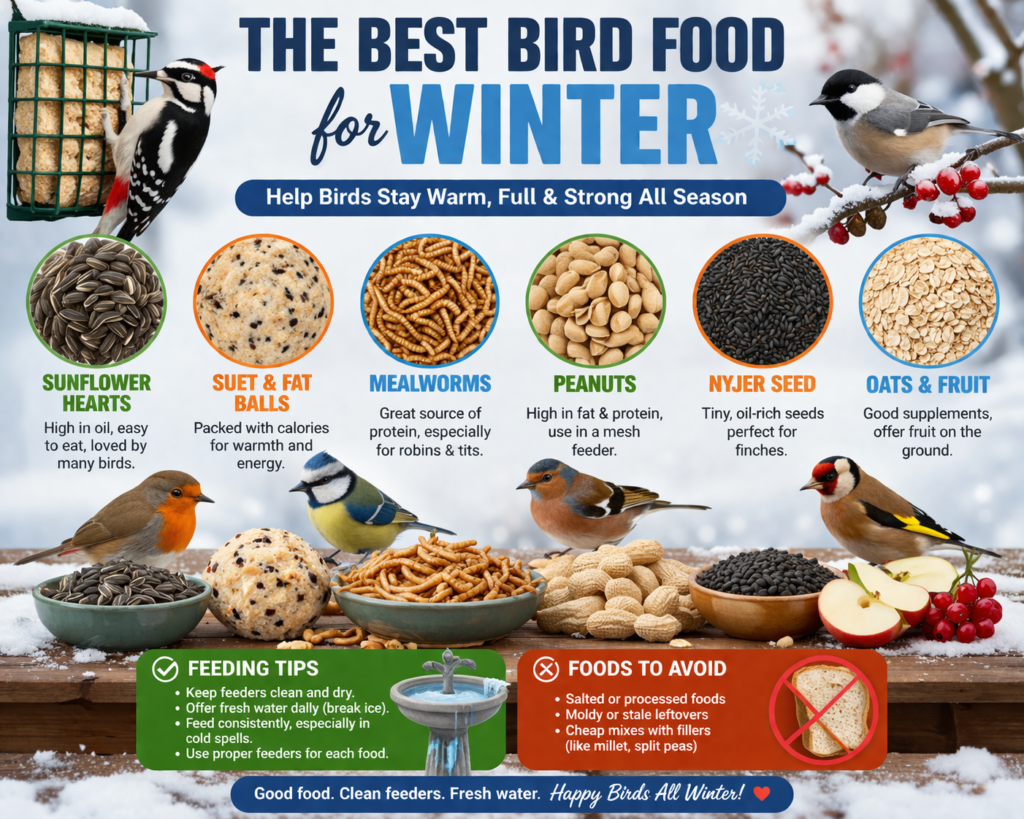
For many gardens, sunflower is the first and strongest answer. If someone asks for the best bird food for winter, sunflower hearts and black sunflower seeds should be near the top of the list. They are rich in oil, easy to eat, and attractive to a wide variety of species.
Sunflower hearts are particularly useful because birds do not need to waste energy cracking shells. In winter, that matters. Birds benefit from food that gives fast access to calories, and sunflower hearts provide exactly that. Black sunflower seeds are also excellent because they contain more oil than striped sunflower varieties, which makes them more energy-rich.
Another advantage is versatility. Tits, finches, sparrows, nuthatches, and many other common birds readily accept sunflower. That broad appeal makes it one of the safest choices for anyone trying to build a reliable winter feeding setup. If you want one simple answer to the question of the best bird food for winter, sunflower is often it.
Suet and Fat-Based Foods
Suet is another leading option because it delivers concentrated energy in a form birds can use quickly. In cold weather, fat is one of the most valuable nutrients a bird can access. It supports heat production and helps birds maintain the reserves they need to get through freezing nights.
That is why many bird experts consider suet, fat balls, and fat cakes among the best bird food for winter choices available. These foods are especially helpful during snow, frost, and extended cold spells when birds need immediate, high-value calories. Species such as woodpeckers, tits, starlings, and robins may all be attracted to fat-based products depending on how they are offered.
However, quality still matters. Cheap fat balls with poor ingredients can be less useful than well-made suet products. A winter feeding station should not just look full. It should offer real nutritional value. Choosing dense, clean, energy-rich suet is a more effective strategy than relying on low-quality mixes.
Mealworms, Peanuts, and Nyjer Seed
A strong winter feeding routine becomes even better when it includes variety. Although sunflower and suet are often central, the best bird food for winter is not always a single product. Some birds respond better when different food types are available.
Mealworms are a particularly good addition for insect-eating birds and are especially popular with robins. If you are trying to support species that do not rely heavily on seed feeders, mealworms can make a noticeable difference. They also add protein as well as energy, which helps diversify your setup.
Peanuts are another powerful winter food because they contain high levels of fat and protein. When offered correctly, they can be extremely valuable. Whole peanuts should be placed in proper mesh or feeder systems designed for birds rather than scattered carelessly. Quality is important too. Safe, clean bird peanuts are far better than using random household leftovers.
Nyjer seed is an excellent specialist option for finches. It is small, oily, and highly attractive to certain species that may ignore larger seed types. While it is not usually the only answer to the best bird food for winter, it is a very useful addition if you want to support finches and improve species diversity in your garden.
Foods to Avoid in Winter
A useful winter bird article should not only say what to feed. It should also explain what not to feed. Many people assume that all scraps are helpful, but that is not true. Some foods offer little value, and others may create real problems.
If you are serious about choosing the best bird food for winter, avoid cheap filler mixes packed with ingredients many small birds do not like or cannot use efficiently. Some low-cost blends look generous but mainly create waste under the feeder. That wasted food can attract pests, increase mess, and reduce the overall quality of the feeding area.
You should also avoid salty foods, heavily processed leftovers, and anything moldy or stale. Winter feeding should support birds, not expose them to poor hygiene or unsuitable ingredients. It is also wise to avoid unsafe feeding methods that can trap feet or create unnecessary hazards.
The principle is simple. The best bird food for winter is not just about what birds will peck at. It is about what genuinely helps them.
How to Feed Birds Properly in Winter
Even the best bird food for winter will not perform well if feeding habits are poor. Food should be placed in clean feeders, refreshed regularly, and supported with fresh water. Many people forget that birds need water in winter too, even when temperatures are low. An ice-free water source can be just as helpful as food.
Consistency also matters. Birds quickly learn where dependable food is available. If you feed irregularly, they may waste energy visiting a spot that is often empty. A regular winter feeding schedule creates trust and reduces unnecessary searching. Morning feeding is especially important because birds need to replace energy lost overnight.
Cleanliness is another critical part of winter feeding. Dirty feeders can spread disease and turn a helpful habit into a harmful one. Uneaten food should not be left to rot, and feeding areas should be monitored for dampness, droppings, and spoilage. A smaller clean feeder is better than a large neglected one.
In practical terms, the best bird food for winter works best when paired with the best feeding habits for winter.
Homemade Bird Food for Winter
Many people also look for homemade options, and this can work well if done properly. Homemade fat cakes made with bird-safe ingredients such as sunflower hearts, oats, and mealworms can be effective and economical. The goal should be to create something nutritious, stable, and energy-rich rather than decorative.
Still, homemade food should follow the same standard as shop-bought food. If it does not help birds maintain energy and if it spoils quickly, then it is not truly the best bird food for winter. Homemade feeding should therefore focus on practical nutrition rather than novelty.
A good homemade mix can support your overall winter setup, but it should not replace the core principles of quality, safety, and cleanliness.
Best Bird Food for Different Winter Visitors
Different birds prefer different foods, which is why the best bird food for winter may vary slightly depending on what visits your garden. Robins often respond well to mealworms and soft foods. Finches are drawn to nyjer and sunflower. Tits and nuthatches usually enjoy sunflower, suet, and peanuts. Woodpeckers often appreciate fat-rich products and peanut feeders.
This does not mean you need a complicated system. It simply means a mixed approach often performs better than relying on one item alone. A garden that offers sunflower hearts, suet, mealworms, and fresh water will usually support a wider range of species than one that depends only on a generic seed blend.
Conclusion
The best bird food for winter is food that delivers high energy, supports different species, and is offered in a safe, clean, and consistent way. Sunflower hearts, black sunflower seeds, suet, mealworms, peanuts, and nyjer seed all have important roles to play. Together, they provide the fat, oil, and calories birds need when winter conditions are at their most difficult.
Choosing the best bird food for winter is ultimately about feeding smarter, not just feeding more. When natural resources are limited, quality food can make a real difference. A thoughtful winter feeding station does more than attract birds for a pleasant view. It helps them meet one of the hardest seasonal tests of the year.