
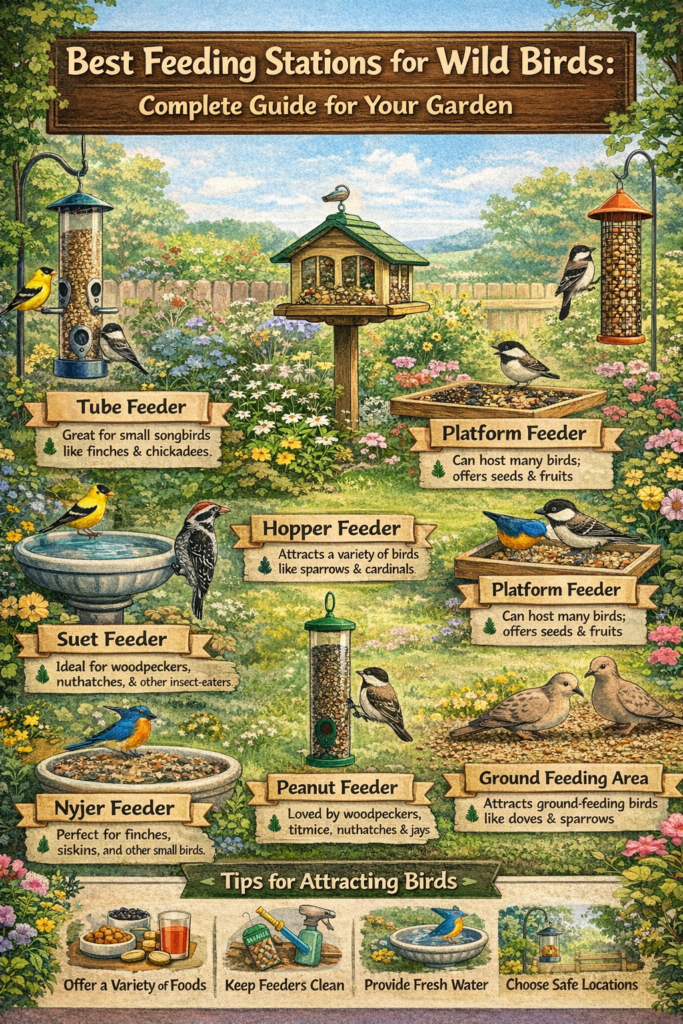
Best Feeding Stations for Wild Birds: Complete Guide for Your Garden
Creating a bird-friendly garden is one of the simplest and most rewarding ways to enjoy nature at home. A good feeding setup can turn a quiet outdoor space into a lively area filled with movement, colour, and birdsong. While many people begin with a single feeder, a full feeding station often offers much better results. That is why learning about the best feeding stations for wild birds is so useful for anyone who wants to attract more birds and create a more organised feeding area.
A feeding station is more than just one feeder hanging from a hook. It usually includes a central pole or stand with multiple arms, hooks, trays, dishes, or holders for different food types. This allows you to offer seed, suet, peanuts, mealworms, or water in one neat setup. It also makes feeding more flexible because different birds prefer different foods and feeding styles. Some birds cling to hanging feeders, while others feed from trays or ground-level dishes. A well-designed station supports a wider range of species and helps make bird feeding easier to manage.
This guide explains the best feeding stations for wild birds, how they work, what features to look for, which birds they attract, where to place them, and how to keep them clean. Whether you are starting from scratch or upgrading your current setup, the right station can make a noticeable difference.
Why Feeding Stations Are Better Than a Single Feeder
Many bird lovers start with one feeder because it is simple and inexpensive. That can work well at first, but it does not always give the variety and flexibility that a feeding station provides. One of the reasons people look for the best feeding stations for wild birds is that they allow multiple food options in one place. This means you can attract more bird species instead of only the ones that like a single seed type or feeder design.
A feeding station can also make your garden look more organised. Instead of hanging random feeders from different branches or rails, everything is placed around one main structure. This is easier to refill, easier to observe, and often easier to clean. Another advantage is that birds can feed at different levels, which may reduce crowding and encourage a more natural feeding pattern.
If your goal is to create a more active and reliable feeding area, then the best feeding stations for wild birds usually offer more long-term value than one feeder alone.
What Is a Wild Bird Feeding Station?
A wild bird feeding station is usually a metal or wooden structure with a main pole or support system. It often includes several hanging hooks, side arms, seed trays, water bowls, and extra attachments. Some models are simple and compact, while others are larger and designed to hold many feeders at the same time.
When people search for the best feeding stations for wild birds, they are usually looking for a setup that can support different feeder types together. A station may include a hook for a tube feeder, another for a suet cage, a tray for ground-feeding birds, and a dish for water. This variety is what makes feeding stations so useful.
A good station should be stable, weather-resistant, and easy to maintain. It should also fit the size of your garden and the type of birds you hope to attract.
Features to Look For in the Best Feeding Stations for Wild Birds
Not every feeding station is equally useful. The best feeding stations for wild birds usually share a few practical qualities that make them more effective.
Strong and Stable Design
A feeding station needs to stay secure outdoors in changing weather. Wind, rain, and visiting birds all put pressure on the structure. A strong pole and stable base are important, especially if you plan to hang several feeders at once. Some feeding stations are pushed directly into the ground with stabilising forks, while others have more elaborate support systems.
Multiple Hooks and Arms
One reason people prefer the best feeding stations for wild birds is flexibility. More hooks and arms mean more food options. You can hang different feeders for different species rather than relying on one food type. This also helps reduce competition at a single point.
Tray or Platform Option
A tray feeder or platform attachment is useful because some birds do not like hanging feeders. Ground-feeding and open-feeding birds often prefer flat surfaces where they can pick through seed more naturally. A tray gives your station more range and helps attract additional species.
Water Dish or Bath Attachment
Birds need water as much as food. Some of the best feeding stations for wild birds include a small dish for water, which makes the station more attractive and more complete. Water can support drinking as well as bathing, depending on the setup.
Weather Resistance
Because feeding stations stay outside, they should be made from materials that can handle moisture and temperature changes. Powder-coated metal is a common choice because it resists rust better than untreated materials. A weather-resistant station lasts longer and stays more attractive.
Easy Maintenance
The best station is one you can keep clean without too much trouble. If parts are hard to remove or awkward to reach, owners may neglect cleaning. The best feeding stations for wild birds are usually simple to refill and maintain.
Types of Feeding Stations for Wild Birds
Different feeding stations suit different needs. Understanding the main types can help you choose the best feeding stations for wild birds for your own space.
Basic Hook Feeding Stations
These are simple models with a main pole and a few hooks. They are a good starting point for beginners who want more than one hanging feeder but do not need a large setup. They work well in smaller gardens and are often easy to install.
Multi-Arm Feeding Stations
These stations have several hooks and often include extra features such as trays, water dishes, or decorative tops. They are among the best feeding stations for wild birds for people who want to offer a range of foods and attract a wider mix of species.
Deluxe Feeding Stations
Deluxe models are larger and often more decorative. They may include several tiers, multiple trays, water bowls, and stronger support systems. These are ideal for dedicated bird lovers who want a more complete feeding area and have enough outdoor space to support it.
Window or Patio Stations
Some compact stations are designed for patios, balconies, or small garden corners. While they may not hold as many feeders, they can still be among the best feeding stations for wild birds for homes with limited space.
Best Feeding Stations for Wild Birds and the Birds They Attract
A major reason people look for the best feeding stations for wild birds is bird variety. A single station with different feeder types can attract many species, depending on the food you offer.
Tube feeders on the station may attract finches, tits, chickadees, and nuthatches.
Suet cages may attract woodpeckers, starlings, and wrens.
Tray feeders may bring in sparrows, robins, blackbirds, doves, and jays.
Peanut feeders may attract tits, woodpeckers, and nuthatches.
Water dishes can encourage many species to visit, even if they are not feeding heavily.
This is one of the biggest strengths of the best feeding stations for wild birds. They support multiple feeding habits at once.
Best Foods to Use With Feeding Stations
A feeding station works best when it offers a variety of foods suited to different birds. Black oil sunflower seed is a strong all-round choice because many wild birds enjoy it. Nyjer seed is useful for finches. Suet is excellent in colder months. Peanuts can attract woodpeckers and tits. Millet and mixed seed may work well in tray feeders for sparrows and doves.
If you want to get the most from the best feeding stations for wild birds, use food that matches the types of birds in your area. High-quality food usually gives better results than cheap mixes full of fillers.
Where to Place Feeding Stations in Your Garden
Placement can make or break a feeding setup. Even the best feeding stations for wild birds may get fewer visitors if they are placed poorly. Birds need a balance between visibility and safety. A station that is too exposed may make birds nervous, while one that is too hidden may be harder for them to notice.
A good location is usually near shrubs or trees, where birds can perch and retreat quickly if needed. At the same time, the station should still be visible enough for birds to find and for you to enjoy watching them. A calm part of the garden is often better than a busy area near constant movement.
Try to place the station somewhere you can access easily for refilling and cleaning. This helps keep the routine practical.
Why Height and Spacing Matter
When setting up the best feeding stations for wild birds, think about height and spacing. Feeders should not all be crowded into one tight cluster. Giving birds space to move between hooks and trays can reduce conflict and make feeding feel safer.
Different birds also prefer different levels. Some species are happy high up, while others feed lower down. A multi-level station naturally supports these preferences and increases the chance of attracting a wider range of birds.
Cleaning and Maintenance Tips
Cleanliness is a key part of any feeding setup. The best feeding stations for wild birds can only stay effective if they are kept hygienic. Old seed, droppings, and damp food can spread disease and discourage birds from visiting.
Remove spoiled food promptly. Clean trays and dishes regularly. Wash hanging feeders according to the food type being used. Water dishes should be refreshed often. The station pole and hooks should also be checked for dirt and wear.
A clean station supports healthier birds and keeps your garden feeding area more pleasant.
Common Mistakes to Avoid
One common mistake is choosing a feeding station based only on appearance. Decorative design can be nice, but function matters more. The best feeding stations for wild birds should be stable, practical, and easy to clean.
Another mistake is hanging too many feeders on a weak station. This can make it unstable and harder for birds to use. Poor food choice is another issue. If you offer only one food type, you may miss the chance to attract more species.
Some owners also forget water. Food matters, but water is a major part of a bird-friendly garden. Adding a water dish can make your station much more appealing.
Small Garden vs Large Garden Feeding Stations
The best feeding stations for wild birds depend partly on garden size. In a small garden, a compact station with two or three hooks and one tray may be enough. This keeps the setup tidy and manageable while still offering variety.
In a larger garden, a bigger multi-arm station may work better. More space allows more feeders, more food choices, and a broader mix of bird species. Large gardens may also support more than one station if you want to spread out activity.
The key is to choose a station that fits your space without feeling overcrowded.
Are Feeding Stations Worth It?
For many bird lovers, yes. The best feeding stations for wild birds offer convenience, variety, and better organisation. They make it easier to create a proper feeding zone instead of a scattered and less efficient setup. They can also improve the appearance of the garden while attracting a more interesting mix of birds.
Although they may cost more than buying one basic feeder, they often provide better value over time because they support multiple foods and species in one place.
Final Thoughts
Choosing the best feeding stations for wild birds can transform your garden into a more active, attractive, and bird-friendly space. A good feeding station does more than hold food. It creates a structured feeding area where different species can find seed, suet, peanuts, and water in one safe place.
The best option depends on your space, your budget, and the birds you want to attract. Look for a station that is strong, stable, weather-resistant, easy to clean, and flexible enough to support more than one feeder type. When combined with good placement, fresh food, and regular maintenance, the right feeding station can bring lasting enjoyment and many more bird visits to your garden.
FAQ
What is the best feeding station for wild birds?
The best feeding station for wild birds is usually one with multiple hooks, a stable design, weather-resistant materials, and options for trays or water dishes.
Are feeding stations better than single bird feeders?
Yes, feeding stations often attract more bird species because they allow different food types and feeder styles in one setup.
Where should I put a bird feeding station?
Place it in a calm, visible, and slightly sheltered area, ideally near shrubs or trees where birds can perch and hide if needed.
What food should I use in a feeding station?
Black oil sunflower seed, nyjer seed, peanuts, suet, and quality mixed seed are all good options depending on the birds in your area.
Do feeding stations need cleaning?
Yes, regular cleaning is essential to keep food fresh, reduce disease risk, and maintain a healthy feeding area.