
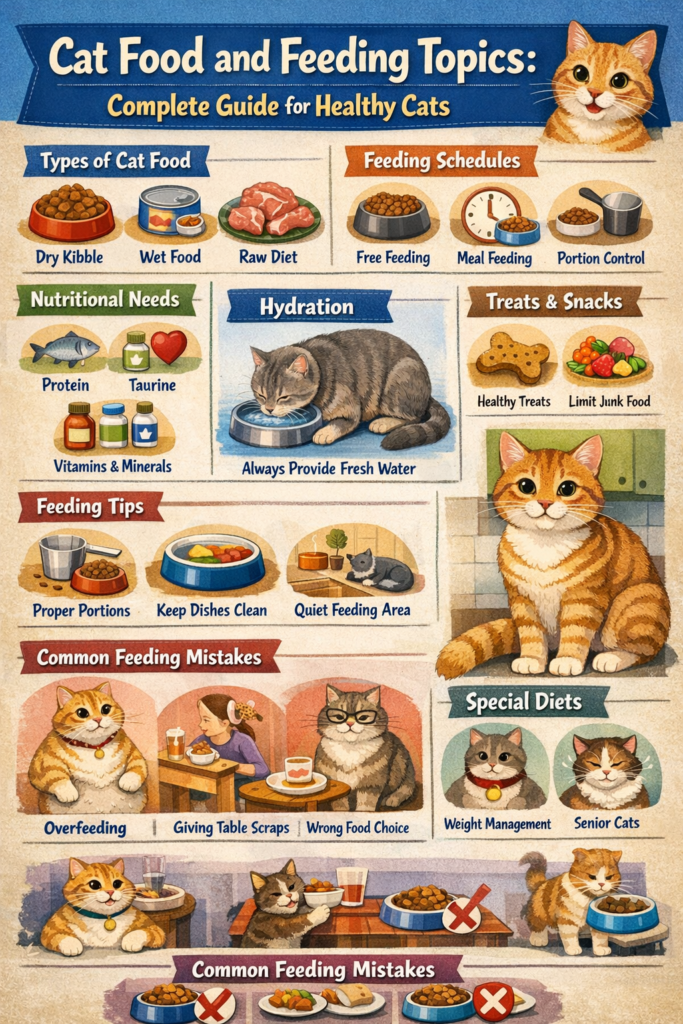
Cat Food and Feeding Topics: Complete Guide for Healthy Cats
When it comes to keeping a cat healthy, active, and comfortable, diet plays one of the biggest roles. Many cat owners focus on toys, grooming, and regular vet visits, but food choices matter just as much. That is why cat food and feeding topics are so important for every pet owner to understand. A proper feeding routine supports growth, weight control, digestion, coat quality, energy levels, and overall long-term health.
Cats are not small dogs. They have unique nutritional needs that require special attention. Some owners feed whatever is available, while others switch foods too often, give too many treats, or do not understand portion control. Over time, these habits may lead to obesity, digestive upset, poor coat condition, or nutritional imbalances. Learning the basics of cat food and feeding topics can help owners make better daily decisions and support a healthier life for their pets.
This guide explains the most important cat food and feeding topics, including food types, feeding schedules, portion sizes, kitten nutrition, senior cat diets, wet vs dry food, and common feeding mistakes. Whether you are caring for a kitten, an adult cat, or an older pet, understanding these feeding basics can make a real difference.
Why Cat Food and Feeding Topics Matter
A cat’s body needs the right balance of nutrients every day. Food is not only about filling the bowl. It is about providing protein, fats, vitamins, minerals, and moisture in the right amounts. That is why cat food and feeding topics deserve careful attention. A poor diet can lead to weight gain, low energy, digestive issues, and even more serious health concerns over time.
Cats are obligate carnivores, which means animal-based protein is a key part of their diet. They require nutrients that are mainly found in meat-based ingredients. This is one of the reasons why feeding cats like humans or dogs is not a good idea. Owners who understand cat food and feeding topics are more likely to choose meals that support muscle maintenance, healthy organs, strong immunity, and good skin and coat condition.
Feeding also affects behaviour. A cat that is hungry too often may become noisy, stressed, or aggressive around food. A cat that is overfed may become lazy and overweight. Balanced feeding helps create a more stable daily routine.
Understanding the Basics of Cat Nutrition
One of the most important cat food and feeding topics is nutrition. Cats need high-quality protein as the foundation of their diet. Protein helps support muscles, tissue repair, and general body function. Fats are also important because they provide energy and support the skin and coat. In addition, cats need vitamins and minerals for bones, immunity, and normal organ function.
Water is another major part of good nutrition. Many cats do not drink enough on their own, which is why food moisture matters. Owners often focus only on ingredients and forget about hydration. This is a major reason cat food and feeding topics include so much discussion about wet food and water intake.
The best diet is not always the most expensive one. A better choice is usually a complete and balanced cat food made for the cat’s age, size, activity level, and health condition.
Types of Cat Food
A major part of cat food and feeding topics is understanding the different types of food available. Each type has benefits and drawbacks, and the best choice depends on the individual cat.
Dry Cat Food
Dry cat food is one of the most common choices because it is easy to store, convenient to serve, and often more affordable. Many owners like dry food because it can stay in the bowl longer than wet food. It is also easy to measure.
However, dry food contains less moisture than wet food. For cats that already drink little water, this may not be ideal if dry food is the only source of nutrition. Dry food can still be part of a healthy routine, but owners should pay attention to water intake and portion size.
Wet Cat Food
Wet food is another major topic in cat food and feeding topics because it contains much more moisture. This can help support hydration, especially for cats that do not drink enough water during the day. Wet food is often more appealing to picky eaters and may be easier for older cats or cats with dental problems to eat.
The downside is that wet food can cost more and spoils faster once opened. It also requires more careful storage. Even so, many owners prefer to include wet food in the daily routine because of its moisture content and taste appeal.
Semi-Moist Food
Semi-moist food is less common, but some owners still use it. It may be attractive to cats because of its texture, but it is not always the first choice for everyday feeding. Many owners focus more on wet and dry combinations instead.
Fresh and Special Diets
Some owners explore fresh food, freeze-dried meals, or special formulas for weight control, hairball support, or sensitive stomachs. These diets can be useful in some cases, but they should still provide complete and balanced nutrition.
Wet Food vs Dry Food
Among all cat food and feeding topics, one of the biggest questions is whether wet or dry food is better. The truth is that both can work if chosen carefully. Dry food is convenient and budget-friendly, while wet food supports hydration and can be more attractive to cats.
Many owners use a mixed feeding approach. They offer dry food for convenience and wet food for moisture and variety. This can work well when portions are controlled properly. The key is not simply choosing one form over the other. The key is making sure the total diet is balanced and suited to the cat’s needs.
How Often Should You Feed a Cat?
Another important part of cat food and feeding topics is feeding frequency. Cats should not always be fed in the same way, because kittens, adults, and senior cats have different needs.
Kittens usually need more frequent meals because they are growing quickly and burn more energy. Adult cats often do well with measured meals one to three times per day, depending on the feeding plan. Some owners free-feed by leaving dry food out all day, but this can lead to overeating in less active cats.
Meal feeding is often easier for portion control. It also helps owners track appetite changes, which can be useful if a cat becomes ill. Feeding on a routine schedule can also reduce begging and create a more stable daily pattern.
Portion Control and Weight Management
Portion control is one of the most practical cat food and feeding topics because many cats gain weight slowly without owners noticing at first. A few extra treats every day or slightly oversized meals can lead to obesity over time.
An overweight cat may face more health problems and may become less active. That is why owners should pay close attention to feeding amounts. The correct portion depends on the food type, calorie level, the cat’s size, age, activity level, and health condition.
Using a measuring cup or kitchen scale can help prevent overfeeding. Guessing often leads to larger portions than needed. If your cat is gaining too much weight, portion adjustment is usually one of the first things to review.
Feeding Kittens
Kitten care is a key section within cat food and feeding topics because young cats need extra nutrition for growth and development. Kittens require more frequent meals and food specially made for their stage of life. Their diet should support bone development, muscle growth, and high energy needs.
A kitten should not be fed like a fully grown cat. Kitten food is designed to provide the nutrients needed during early growth. Meals should be offered regularly, and fresh water should always be available. Good feeding habits built during kittenhood often make later feeding easier.
Feeding Adult Cats
Adult cats need maintenance nutrition rather than growth-focused feeding. At this stage, the goal is to support a healthy weight, stable digestion, good coat quality, and steady energy. Adult cats may be playful and active, or more relaxed and indoor-based, so food portions should match their lifestyle.
This is one of the most relevant cat food and feeding topics for everyday pet care because adult cats often remain on the same diet for a long time. Owners should still monitor body condition, appetite, litter habits, and energy levels to make sure the current diet is working well.
Feeding Senior Cats
Senior cats may need diet adjustments as they age. Older cats can become less active, develop dental issues, or show changes in digestion and appetite. Some may need softer food, easier-to-chew textures, or formulas made for older pets.
This is why senior nutrition remains an important part of cat food and feeding topics. Ageing cats should not always stay on the exact same plan they had in early adulthood. Regular observation helps owners decide whether a change in texture, meal size, or formula may be useful.
Treats and Snacks
Treats are often overlooked in discussions about cat food and feeding topics, but they matter more than many owners realise. Small treats may seem harmless, yet they can add extra calories quickly. Some cats also become fussy eaters when they receive too many snacks.
Treats should be used in moderation. They can be useful for training, bonding, or rewarding calm behaviour, but they should not replace balanced meals. Owners should also avoid sharing too much human food, especially if it is salty, greasy, or heavily seasoned.
Water and Hydration
Hydration is one of the most valuable cat food and feeding topics because many cats do not drink a lot of water naturally. This is why moisture in food can be helpful. Cats should always have access to clean, fresh water. Some cats prefer running water, which is why water fountains are popular among pet owners.
If a cat eats mostly dry food, water intake becomes even more important. Owners should watch for signs that the cat is drinking enough and staying comfortable.
Common Feeding Mistakes
Learning cat food and feeding topics also means knowing what mistakes to avoid. Common feeding errors include overfeeding, changing food too suddenly, giving too many treats, ignoring water intake, and feeding a diet that does not match the cat’s life stage.
Another mistake is relying only on what the cat seems to like. Cats may prefer certain textures or flavours, but preference alone should not decide the entire feeding plan. Nutritional quality matters more than short-term excitement at mealtime.
Some owners also leave food out all day without measuring it. This can work for some cats, but for many indoor pets it leads to steady weight gain.
How to Change Cat Food Safely
Food changes should usually be done gradually. A sudden switch can upset the stomach and lead to loose stool, refusal to eat, or general discomfort. A slow transition is better.
A simple approach is to mix a small amount of the new food with the old food and gradually increase the new portion over several days. This gives the cat time to adjust and helps reduce digestive upset. Gradual transitions are an essential part of cat food and feeding topics because diet changes are common throughout a cat’s life.
Creating a Healthy Feeding Routine
A healthy feeding routine is one of the best outcomes of understanding cat food and feeding topics. A good routine includes measured meals, fresh water, suitable food for the cat’s age, limited treats, and regular observation of weight and appetite.
Cats often do well with consistency. Feeding at roughly the same times each day helps create a sense of routine. Clean bowls, proper storage, and calm feeding areas also support better eating habits.
Final Thoughts
Understanding cat food and feeding topics can help owners make smarter decisions every day. Feeding is not only about convenience. It is about building a routine that supports your cat’s health, comfort, and long-term wellbeing. From choosing between wet and dry food to controlling portion size and adjusting meals by life stage, every detail matters.
The best feeding plan is one that suits your cat’s age, activity level, body condition, and preferences while still providing balanced nutrition. When owners learn the basics of cat food and feeding topics, they are better prepared to support healthy growth, strong digestion, proper hydration, and a better quality of life.
FAQ
What is the best food for cats?
The best food for cats is a complete and balanced formula that suits their age, size, and health needs.
Is wet food better than dry food for cats?
Wet food helps with hydration, while dry food is convenient and often more affordable. Many cats do well with a mix of both.
How many times should I feed my cat?
It depends on age and routine. Kittens need more frequent meals, while adult cats often do well with measured meals once or more per day.
Should cats have treats every day?
Treats can be given in small amounts, but too many may lead to weight gain or fussy eating habits.
Why is portion control important?
Portion control helps prevent overeating and supports healthy weight management.