
Best Food for Dogs With Allergies: Complete Guide for Pet Owners
Dogs with food sensitivities often show signs that owners cannot ignore. Constant scratching, chewing paws, red skin, recurring ear infections, vomiting, loose stools, and poor coat condition can all point to a diet problem. When these symptoms continue, many owners begin looking for the best food for dogs with allergies so they can help their pet feel better and live more comfortably.
Choosing the right diet is important because food plays a major role in skin health, digestion, immunity, and energy. However, many people make the mistake of choosing a product based only on marketing words such as “natural,” “premium,” or “sensitive skin.” The real answer lies in the ingredient list, the protein source, and how your dog responds over time. The best food for dogs with allergies is usually not the one with the most attractive packaging. It is the one with the most suitable ingredients for your dog’s specific needs.
Why Food Allergies in Dogs Matter
Food allergies can affect more than your dog’s skin. A dog with dietary sensitivity may feel uncomfortable every day. Itching can interrupt sleep. Ear irritation can lead to repeated infections. Digestive issues can make feeding stressful. Over time, small signs can grow into bigger health concerns. This is why finding the best food for dogs with allergies is not only about stopping itching. It is about improving overall wellbeing.
Some dogs develop allergies to ingredients they have eaten for a long time. Others may react to artificial additives, fillers, or multiple protein sources in one formula. Because every dog is different, there is no single diet that works for all pets. Still, a carefully chosen food can reduce common triggers and provide a more stable feeding routine.
Common Signs of a Food-Related Problem
Before switching diets, it helps to recognise the most common warning signs. Dogs with food sensitivities may show:
- itchy skin
- red or inflamed patches
- constant paw licking
- face rubbing
- recurring ear infections
- hair thinning or hair loss
- hot spots
- vomiting
- diarrhoea
- gas or bloating
- poor stool quality
If your dog has several of these symptoms, it may be time to consider the best food for dogs with allergies and start monitoring ingredients more carefully. Skin issues and digestive discomfort often appear together, which is why diet is such an important area to review.
What Usually Triggers Food Allergies
Many allergy-related reactions in dogs are linked to proteins. Common triggers may include beef, chicken, dairy, soy, eggs, wheat, and corn. This does not mean these ingredients are bad for every dog. Many healthy dogs eat them without any problem. But for sensitive pets, one or more of these foods may lead to irritation. That is why owners searching for the best food for dogs with allergies often begin by removing common triggers and simplifying the diet.
Artificial colours, flavours, and strong preservatives may also make some formulas harder to tolerate. In addition, foods with too many ingredients can make it difficult to identify what is causing the reaction. A simpler recipe often gives better results because it reduces confusion and makes tracking easier.
What Makes a Good Allergy-Friendly Diet
A good allergy-friendly formula is usually simple, balanced, and easy to digest. It should provide full nutrition while avoiding unnecessary ingredients. In many cases, the best food for dogs with allergies has a short ingredient list, one clear protein source, and carbohydrates that are gentle on the stomach.
Quality matters more than trends. Some owners automatically choose grain-free food, while others switch randomly between brands every week. Neither approach is ideal without a plan. What works best is a consistent diet built around ingredients your dog can tolerate well.
Types of Food That May Help
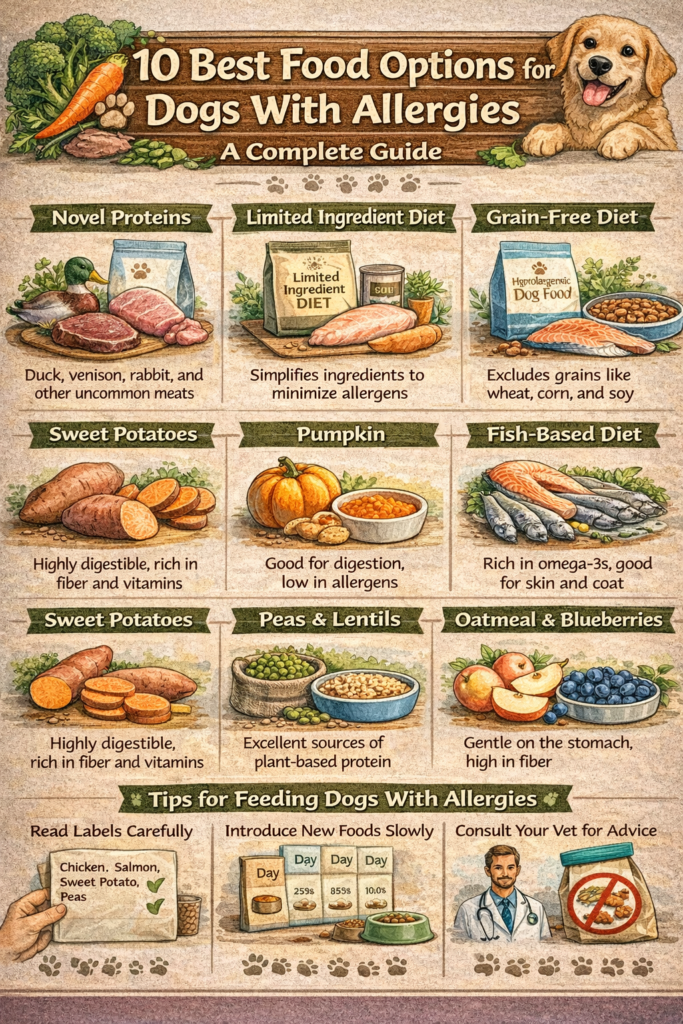
There are several diet styles that can support allergic or sensitive dogs. The best food for dogs with allergies may fall into one of these categories depending on your pet’s history and symptoms.
Limited-Ingredient Diets
These formulas contain fewer ingredients, making it easier to identify possible triggers. A limited-ingredient recipe usually includes one main protein and a smaller number of extras. This makes it one of the most practical options for owners who want a simpler starting point.
Novel-Protein Diets
Some dogs react to proteins they have eaten for years. In such cases, a novel-protein formula may help. These foods often include duck, salmon, venison, rabbit, or lamb. Because these proteins may be less familiar to the dog’s system, they can sometimes reduce the chance of a reaction.
Hydrolysed Diets
Hydrolysed diets are designed so the protein is broken into very small parts. This may help dogs with more serious allergy concerns. These formulas are often used under veterinary guidance and can be useful when standard commercial food has not helped.
Prescription Diets
For dogs with severe symptoms, long-term skin problems, or repeated digestive trouble, a prescription formula may be the safest option. It may cost more, but it can save time and reduce trial-and-error.
Ingredients to Look For
When choosing the best food for dogs with allergies, it is smart to focus on ingredients that are simple and useful. Foods made for sensitive pets often include:
- salmon
- duck
- lamb
- rabbit
- venison
- sweet potato
- pumpkin
- oats
- brown rice
- peas
- fish oil
- flaxseed
These ingredients are popular because many are easier to digest and may support healthier skin and coat condition. Fish oil and flaxseed are especially useful because they provide fatty acids that support skin comfort.
Ingredients to Avoid
While every dog is different, many owners try to avoid the most common trigger ingredients when testing a new food. The best food for dogs with allergies is often free from multiple common irritants at the same time. These may include:
- beef
- chicken
- dairy
- soy
- wheat
- corn
- eggs
- artificial colours
- artificial flavours
- harsh preservatives
It is also important to remember that treats matter. Some people change the main food but continue giving snacks, leftovers, chew sticks, or flavoured biscuits. That can interfere with progress. If you want to know whether a diet is working, the whole feeding routine needs to stay controlled.
Dry Food or Wet Food?
Owners often ask whether dry or wet food is better. The answer depends on the dog. Dry food is easier to store, more affordable, and convenient for daily feeding. Wet food can be more appealing to picky eaters and may provide extra moisture. The important thing is not the texture. The important thing is the ingredient quality. A carefully made dry formula can be the best food for dogs with allergies, while a poor wet formula may still cause problems.
So instead of focusing only on dry versus wet, read the label carefully and think about how your dog responds to the ingredients.
Dogs With Sensitive Stomachs
Some dogs have both skin irritation and digestive trouble. In these cases, the best food for dogs with allergies should be gentle on the stomach as well as supportive of skin health. A simple recipe with one protein source and easy-to-digest carbohydrates often works well. Dogs with sensitive stomachs may do better when meals stay consistent and do not change frequently.
Foods made with pumpkin, oats, rice, or sweet potato may help digestion in some dogs. At the same time, avoiding complicated formulas can make feeding much easier. When both stomach and skin symptoms are present, simplicity becomes even more important.
How to Switch Foods Properly
Even the best food for dogs with allergies should not be introduced too quickly unless your vet tells you otherwise. A sudden change may upset the stomach and create new issues. A slow transition usually works best.
A common feeding plan is:
- Day 1 and 2: 75% old food, 25% new food
- Day 3 and 4: 50% old food, 50% new food
- Day 5 and 6: 25% old food, 75% new food
- Day 7: 100% new food
During this transition, avoid giving too many extra treats. Keep the process simple so you can see whether the new diet is helping.
How Long Before You See Results?
Many owners expect a new diet to work within a few days. Some digestive symptoms may improve quickly, but skin issues often take longer. If you want to know whether you found the best food for dogs with allergies, give the food enough time to show a clear effect. Some dogs improve within a few weeks, while others need longer.
The biggest mistake is changing formulas too often. When owners switch every week, they make it harder to tell what is helping. Patience and consistency are essential when dealing with allergies.
Mistakes Owners Often Make
When searching for the best food for dogs with allergies, owners often make a few common mistakes. One is choosing food based on trendy labels rather than ingredients. Another is focusing only on the main food while ignoring treats and snacks. A third mistake is switching too quickly before giving one formula time to work.
Some also assume that grain-free always means better. In reality, grain-free is only useful when it actually suits the dog’s needs. The same is true for expensive brands. A higher price does not automatically mean a better fit.
Final Thoughts
Finding the best food for dogs with allergies takes patience, observation, and a simple plan. The goal is to choose a diet that reduces likely triggers, supports digestion, and helps your dog feel comfortable again. For some pets, that may be a limited-ingredient food. For others, it may be a novel-protein or prescription formula.
The right choice depends on your dog’s symptoms, ingredient history, and how the body responds over time. When owners read labels carefully, keep feeding consistent, and avoid unnecessary extras, they have a much better chance of success. In the end, the best food for dogs with allergies is the one that helps your dog itch less, digest better, and enjoy daily life with fewer problems.
FAQs
What is the best food for dogs with allergies?
The best food for dogs with allergies is usually a simple, balanced formula with limited ingredients and one clear protein source.
Can chicken cause problems in allergic dogs?
Yes, some dogs react to chicken, although others tolerate it well. It depends on the individual dog.
Is grain-free always necessary?
No. Some dogs benefit from grain-free food, but many allergy issues are linked more to protein sources than grains.
How long should I try a new food?
A new food should be given enough time to judge properly. Frequent switching often creates more confusion.
Do treats affect the results?
Yes. Treats, leftovers, and flavoured snacks can interfere with progress and make it harder to identify the trigger.