
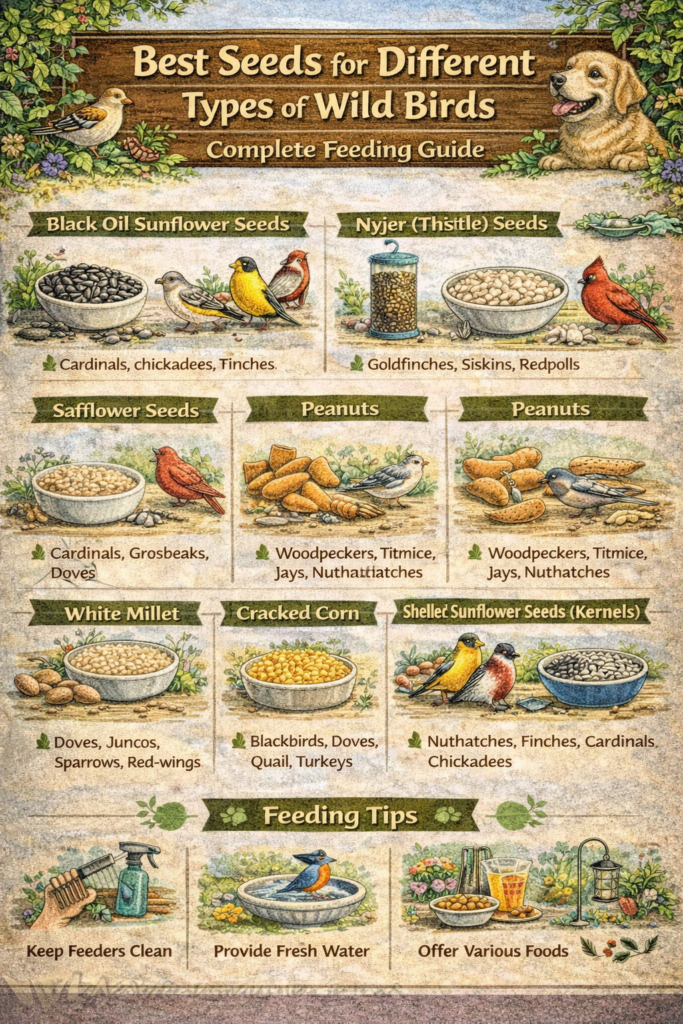
Best Seeds for Different Types of Wild Birds: Complete Feeding Guide
Feeding wild birds is one of the simplest ways to enjoy nature from your garden, balcony, backyard, or window. A well-stocked feeder can bring colour, movement, and birdsong into your outdoor space every day. However, many people fill a feeder without really knowing which seeds are best or which birds they are trying to attract. That is why understanding the best seeds for different types of wild birds is so important. The right seed mix can attract more birds, reduce waste, and help you build a feeding routine that supports a wider variety of wild species.
Not all birds eat the same food. Some prefer small oily seeds, while others look for larger seeds, cracked grains, or seeds with soft shells. A finch will not feed in the same way as a dove, and a cardinal may choose food that a sparrow ignores. If you want better results from your feeder, choosing the right food matters just as much as the feeder itself. Learning about the best seeds for different types of wild birds helps bird lovers make smarter choices and enjoy more successful feeding.
This guide explains which seeds are best for common wild birds, how to choose the right seed mix, what to avoid, and how to improve your bird feeding setup. Whether you are a beginner or already enjoy regular birdwatching, this guide will help you understand the best seeds for different types of wild birds in a practical and easy way.
Why Seed Choice Matters
Many people think any birdseed will do the job, but that is not always true. Cheap seed mixes often contain fillers that many birds do not like. These fillers may sit in the feeder, fall to the ground, or create mess and waste. Choosing the best seeds for different types of wild birds can improve feeding success, attract a wider range of species, and help prevent unnecessary seed loss.
Birds choose food based on size, shape, shell thickness, oil content, and how easy it is to handle. Small songbirds often prefer finer seeds. Larger birds may enjoy bigger, sturdier seeds. Ground-feeding birds may search for fallen grains, while clinging birds prefer tube feeders filled with small seed. When you match seed type to bird preference, feeding becomes more effective and rewarding.
Black Oil Sunflower Seeds
Black oil sunflower seed is often considered one of the top answers when discussing the best seeds for different types of wild birds. These seeds are popular because they have a high oil content and a thinner shell than striped sunflower seeds. That makes them easier for many birds to crack and eat.
Black oil sunflower seeds attract a wide range of birds, including cardinals, finches, chickadees, nuthatches, grosbeaks, woodpeckers, and jays. Because so many species enjoy them, they are often called one of the most versatile bird seeds available. If someone wants to attract many kinds of backyard birds with one seed type, black oil sunflower is usually a very strong choice.
Another advantage is that these seeds provide good energy, which is especially useful during colder months or nesting periods when birds need extra nutrition.
Nyjer Seed
Nyjer seed is another popular option in discussions about the best seeds for different types of wild birds. It is very small, lightweight, and rich in oil. This seed is especially loved by finches, including goldfinches and other small seed-eating birds.
Because nyjer seed is tiny, it works best in special feeders with small feeding ports. It can also be offered in mesh socks designed for clinging birds. If your main goal is to attract finches, nyjer seed is often one of the best choices. Many bird lovers keep it as a separate feeding option rather than mixing it heavily with larger seeds.
Nyjer can be more expensive than other seeds, but it is often worth using when you want to target smaller, more delicate feeders.
White Proso Millet
White proso millet is one of the best seeds for different types of wild birds when it comes to attracting sparrows, doves, juncos, buntings, and towhees. It is a small, round seed that many ground-feeding birds especially enjoy. It can be offered in platform feeders, tray feeders, or scattered lightly on the ground in a safe feeding area.
Millet is a very common ingredient in birdseed mixes, but quality matters. When used well, it can attract a good variety of birds. However, too much millet in a low-quality mix may increase waste if the local birds in your area prefer other seeds. That is why it helps to know your target birds rather than buying the cheapest mix available.
For bird lovers who see lots of sparrows, doves, or juncos, white proso millet can be a reliable and useful seed.
Safflower Seeds
Safflower seed is another strong candidate when looking at the best seeds for different types of wild birds. It is especially popular with cardinals, chickadees, doves, and some grosbeaks. One reason many people like safflower is that certain nuisance species tend to avoid it, making it useful when you want to reduce competition at the feeder.
Safflower has a thicker shell than some other seeds, so not every bird will prefer it. Still, it can be very helpful for people who want to attract cardinals more consistently. It works well in tube feeders, hopper feeders, and platform feeders.
If you often see cardinals in your garden, safflower can be a smart addition to your feeding routine.
Cracked Corn
Cracked corn is one of the more affordable options among the best seeds for different types of wild birds, especially for larger ground-feeding birds. It is commonly eaten by doves, quail, jays, crows, and some sparrows. It is also sometimes used in mixes meant for general feeding.
Because cracked corn is usually eaten on the ground, it should be offered carefully. Too much can attract unwanted pests or create mess if left out in damp conditions. It is best used in moderation and in places where ground-feeding birds can eat safely.
Cracked corn can be a helpful supplement, but it is usually not the only seed type you want to offer if your goal is to attract a broad range of songbirds.
Shelled Sunflower Hearts and Chips
Sunflower hearts and chips are another excellent answer to the question of the best seeds for different types of wild birds. These are sunflower seeds without the shell, which means birds can eat them more easily and there is less mess under the feeder. Many birds that like black oil sunflower also enjoy shelled sunflower.
Sunflower hearts attract finches, cardinals, chickadees, woodpeckers, nuthatches, titmice, and many others. They work well in tube feeders, tray feeders, and hopper feeders. Because there are no shells to crack, they are especially useful in tidy feeding areas or places where people want to keep patios and walkways cleaner.
Although shelled sunflower can cost more than whole seeds, many people find it worth the extra cost because birds eat more of the product and less is wasted.
Striped Sunflower Seeds
Striped sunflower seeds are larger and have thicker shells than black oil sunflower seeds. They are still part of the conversation around the best seeds for different types of wild birds, but they are often better suited to larger birds with stronger bills. Cardinals, jays, and some larger songbirds can manage them well.
These seeds may not be the best first choice if you want to attract smaller birds, but they can still play a role in mixed feeding setups. Some people use both black oil and striped sunflower depending on the species they see most often.
Peanut Pieces and Mixed Seeds
Although peanuts are technically not seeds, peanut pieces are often included in bird feeding plans because they attract woodpeckers, jays, nuthatches, titmice, and chickadees. In many discussions about the best seeds for different types of wild birds, peanuts appear as an important high-energy option. They should be unsalted and offered in moderation.
Mixed seed blends can also be useful, but not all mixes are equal. A good mix contains high-quality ingredients such as black oil sunflower, millet, safflower, or sunflower chips. A poor mix may contain too many fillers that birds ignore. Reading the label is important if you want better results.
Best Seeds for Common Wild Birds
To understand the best seeds for different types of wild birds, it helps to match seed choice to the birds you want to attract.
Finches often prefer nyjer seed and sunflower chips.
Cardinals usually like black oil sunflower and safflower.
Sparrows often enjoy millet and cracked corn.
Doves commonly eat millet, safflower, and cracked corn.
Chickadees like black oil sunflower, safflower, and sunflower hearts.
Blue jays often go for sunflower seeds and peanut pieces.
Woodpeckers enjoy sunflower hearts and peanuts.
Juncos often feed on millet and other small seeds placed on or near the ground.
This is why a single feeder with one cheap mix may not always bring the variety people hope for. The more closely you match food to bird preference, the better your results will be.
How to Choose the Right Birdseed Mix
When selecting the best seeds for different types of wild birds, focus on quality rather than quantity. A cheaper mix may seem like a bargain, but if birds throw most of it away, you end up spending more in the long run. Look for blends with useful ingredients and fewer fillers.
A good mix often includes black oil sunflower, millet, sunflower chips, or safflower. A poorer mix may contain too much red milo or other grains that many wild birds leave behind. If you want to reduce waste, start by identifying the birds in your area and buying seed that matches their feeding habits.
Feeder Type Matters Too
Seed choice is important, but feeder style also affects success. Tube feeders work well for sunflower seed and nyjer. Platform feeders are useful for millet, cracked corn, and mixed seeds. Hopper feeders can handle a variety of seeds and attract medium-sized birds. Ground feeding areas are often best for doves, sparrows, and juncos.
When learning about the best seeds for different types of wild birds, it helps to remember that even the best seed may not attract the right birds if it is placed in the wrong feeder.
Common Mistakes to Avoid
One common mistake is buying seed based only on price. Another is using one type of seed for every bird. Some people also let old seed stay in damp feeders for too long, which can make the food less appealing or unsafe.
Overfilling feeders is another problem. It is better to refill more often with fresh seed than to leave large amounts sitting for too long. Clean feeders also matter. Dirty feeders can spread disease and reduce bird activity.
Seasonal Feeding Tips
Different seasons may affect how birds use feeders. In winter, high-energy seeds such as sunflower are especially useful. In spring and summer, birds may still visit feeders, but natural food sources also increase. In autumn, seed-rich feeders can support birds preparing for colder weather.
Offering the best seeds for different types of wild birds throughout the year helps create a more stable feeding station, but you may notice changes in species and feeding frequency from season to season.
Final Thoughts
Understanding the best seeds for different types of wild birds can completely change your bird feeding experience. Instead of filling a feeder and hoping for the best, you can create a more thoughtful setup that attracts the species you most enjoy watching. Black oil sunflower, nyjer, millet, safflower, cracked corn, and sunflower hearts all have value, but each works best for different birds and feeding styles.
The smartest approach is to start with high-quality seed, match it to your local bird population, and use the right feeder for the job. With a little observation and the right food choices, your garden or backyard can become a much more active and enjoyable place for wild birds to visit.
FAQ
What is the best all-purpose bird seed?
Black oil sunflower seed is often considered one of the best all-purpose options because it attracts many bird species.
Which seed attracts finches?
Nyjer seed and sunflower chips are among the best choices for finches.
What do cardinals like to eat?
Cardinals often enjoy black oil sunflower seeds and safflower seeds.
Is millet good for wild birds?
Yes, millet is popular with sparrows, doves, juncos, and other ground-feeding birds.
How do I reduce wasted bird seed?
Choose higher-quality seed, avoid filler-heavy mixes, clean feeders regularly, and match seed type to the birds in your area.