
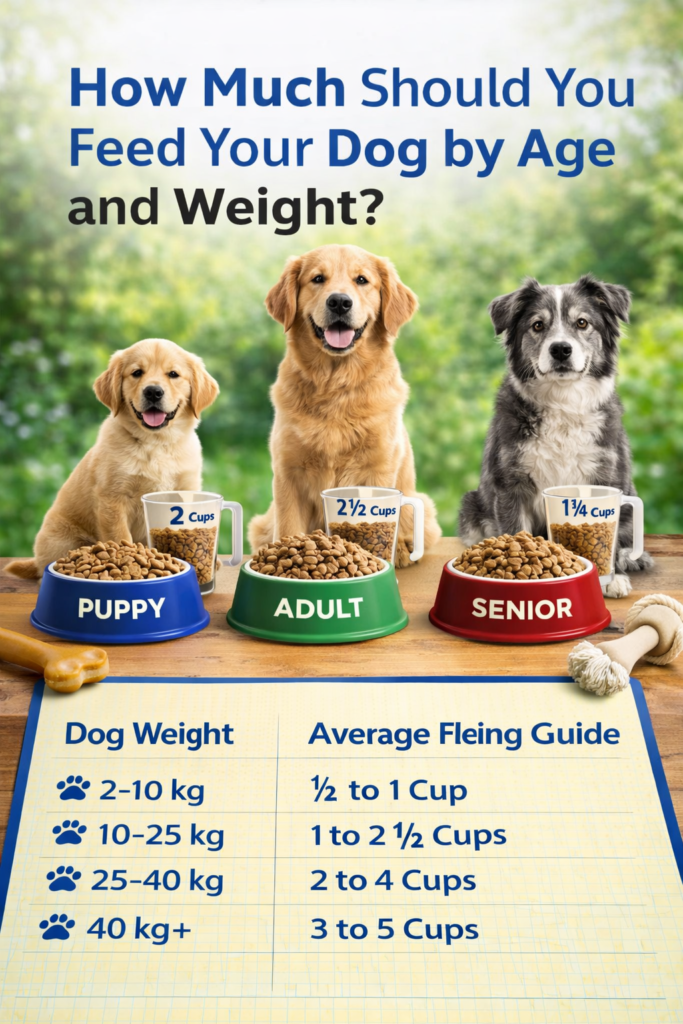
How Much Should You Feed Your Dog by Age and Weight?
If you are a dog owner, one of the most important questions you can ask is: how much should you feed your dog by age and weight? This question matters because feeding the right amount is one of the biggest factors in your dog’s long-term health. Many owners either feed too much or too little without realising it. Some follow the dog food bag without checking whether the advice fits their own pet. Others guess portions by eye. In both cases, the result can be poor nutrition, weight gain, low energy, or slow development.
The truth is that how much should you feed your dog by age and weight does not have one single answer for every dog. A small puppy, an active adult dog, and a senior dog will all need different portion sizes. Breed size, activity, metabolism, food quality, and health condition also play a part. Still, age and weight are the two biggest starting points, which is why so many pet owners search for how much should you feed your dog by age and weight when trying to create the right routine.
This guide explains how much should you feed your dog by age and weight in a simple but detailed way. It covers puppies, adult dogs, and senior dogs. It also explains how food type changes the answer, how to judge portion size, and what feeding mistakes to avoid. If you want a healthier dog and a better feeding routine, understanding how much should you feed your dog by age and weight is the right place to start.
Why How Much Should You Feed Your Dog by Age and Weight Matters
Many dog owners do not realise how much damage poor feeding habits can cause over time. If you are asking how much should you feed your dog by age and weight, you are already thinking in the right direction. Feeding too much can lead to obesity, joint pressure, diabetes risk, digestive stress, and reduced mobility. Feeding too little can cause low energy, poor body condition, weak growth in puppies, and nutrient shortages.
That is why how much should you feed your dog by age and weight is not just a simple feeding question. It is a health question. The right amount of food helps your dog stay active, maintain muscle, support organ function, and avoid unhealthy fat gain. Age matters because a growing puppy needs more energy for development, while a senior dog may need fewer calories because activity has dropped. Weight matters because a small dog and a large dog obviously cannot eat the same amount.
When you understand how much should you feed your dog by age and weight, you stop guessing and start feeding with more confidence. That creates better health outcomes over time.
How Much Should You Feed Your Dog by Age and Weight During Puppyhood
Puppies grow fast, so how much should you feed your dog by age and weight is especially important during the early months. A puppy needs more calories per kilogram than an adult dog because its body is still developing. Bones, muscles, organs, and the immune system all need support. At the same time, a puppy has a small stomach, which means meals must be smaller and more frequent.
If you want to know how much should you feed your dog by age and weight in the puppy stage, you must look at both age in months and expected adult size. A toy breed puppy and a large-breed puppy will not follow the same pattern. Smaller puppies often burn energy quickly, while larger puppies need careful portion control so they do not grow too fast.
In general, puppies under 3 months are often fed four meals each day. Puppies from 3 to 6 months usually move to three meals a day. After about 6 months, many can begin moving to two meals daily. However, the exact routine still depends on the dog. This is why how much should you feed your dog by age and weight remains the key question rather than simply asking how many bowls to give.
Puppy food also matters. If you are trying to work out how much should you feed your dog by age and weight, you must make sure the dog is eating puppy formula rather than adult food. Puppy food is made to support growth and usually contains more calories and nutrients. A puppy eating adult food may appear to get enough volume but still not get the right nutritional support.
How Much Should You Feed Your Dog by Age and Weight for Small Breed Dogs
For small breed dogs, how much should you feed your dog by age and weight often becomes a question of precision. Small dogs do not need a huge amount of food by volume, but they can still have fast metabolisms. This means their meals must be carefully measured. A little too much can quickly lead to weight gain, while too little may leave them low in energy.
A small puppy may need several small meals per day, while a healthy small adult often does well with two meals. Because small breeds can gain weight easily, owners asking how much should you feed your dog by age and weight should pay close attention to treats, table scraps, and calorie-dense snacks. Even small extras can affect body condition.
If you have a toy breed or small dog, the answer to how much should you feed your dog by age and weight should always include regular portion measurement rather than guessing.
How Much Should You Feed Your Dog by Age and Weight for Medium Dogs
For medium-sized dogs, how much should you feed your dog by age and weight is still strongly affected by age, but activity level starts to matter even more. A medium dog that spends time outdoors, walks a lot, or plays actively may need more food than another dog of the same size that mostly rests indoors.
This is why how much should you feed your dog by age and weight cannot be based on weight alone. Two medium dogs at the same weight can have different energy requirements. Puppies in this category need steady growth support, adults need balanced maintenance feeding, and older dogs may need fewer calories.
Owners of medium dogs often make the mistake of assuming their dog is “average” and therefore easy to feed. In reality, how much should you feed your dog by age and weight still requires observation, especially if the dog’s activity changes through the year.
How Much Should You Feed Your Dog by Age and Weight for Large and Giant Dogs
Large and giant breeds need especially careful feeding. If you are wondering how much should you feed your dog by age and weight for a big dog, the answer must include growth control, joint support, and consistent measurement. Large-breed puppies should not be overfed because rapid growth can place extra stress on bones and joints. This can create long-term structural problems.
For adult large dogs, how much should you feed your dog by age and weight is closely linked to movement and body condition. Because the portions are larger, even a small measuring error can add a lot of extra calories each day. Giant breeds need structure, not free feeding. Owners may think a big dog should always have a very full bowl, but that idea often causes unnecessary weight gain.
When asking how much should you feed your dog by age and weight for large breeds, it is important to focus on lean condition, not just appetite.
How Much Should You Feed Your Dog by Age and Weight for Adult Dogs
Once a dog reaches maturity, how much should you feed your dog by age and weight becomes more stable, but not completely fixed. Adult dogs usually need enough food to maintain healthy body condition without gaining excess fat. Most adult dogs do well with two meals per day, which helps maintain routine and supports digestion.
Still, the answer to how much should you feed your dog by age and weight depends on more than a scoop size. A working dog, athletic dog, or highly active dog usually needs more calories than a calm indoor companion of the same weight. This is why feeding charts should always be treated as starting points.
If you are asking how much should you feed your dog by age and weight, always compare the suggested amount with your dog’s actual body shape. You should generally be able to feel the ribs without pressing too hard, see a waist from above, and notice a gentle tuck in the belly area. These signs often tell you more than the bag alone.
How Much Should You Feed Your Dog by Age and Weight for Senior Dogs
Senior feeding is often overlooked. Many owners continue using the same routine for years without asking again how much should you feed your dog by age and weight once the dog enters old age. But senior dogs often need fewer calories because activity levels decrease. At the same time, they still need enough good nutrition to protect muscle, immune health, and general comfort.
That means how much should you feed your dog by age and weight for a senior dog is often slightly lower than in adulthood, though not always. Some older dogs lose weight too easily and may need extra support. Others gain weight because they move less. Health issues, medication, and appetite changes can all affect feeding.
If your dog is older, it is wise to revisit the question how much should you feed your dog by age and weight rather than assuming the old portion is still correct.
How Much Should You Feed Your Dog by Age and Weight Based on Food Type
One reason how much should you feed your dog by age and weight can be confusing is that not all foods are equally dense in calories. A cup of one kibble may contain far more calories than a cup of another. Wet food, raw food, fresh food, and homemade diets can differ even more.
This means the answer to how much should you feed your dog by age and weight changes when the food changes. If you switch brands or switch from dry to wet food, you cannot safely keep the same volume without checking the calorie difference. Many feeding mistakes happen when owners ignore this point.
Treats also affect the answer. If you regularly give biscuits, training rewards, leftovers, or chews, then how much should you feed your dog by age and weight at mealtime may need to be reduced. Otherwise, total calorie intake becomes higher than expected.
Signs You Are Feeding Too Much
A useful way to assess how much should you feed your dog by age and weight is to observe body condition. Signs of overfeeding include gradual weight gain, a wider body shape, reduced waistline, low stamina, and difficulty feeling the ribs. Many dogs will continue eating enthusiastically even when they are already getting too much.
If you notice these signs, review how much should you feed your dog by age and weight in your routine. Measure more carefully, cut back slightly if needed, and look at treat intake too.
Signs You Are Feeding Too Little
Underfeeding can also happen. If you are unsure how much should you feed your dog by age and weight, watch for visible ribs, low muscle tone, poor growth in puppies, tiredness, dull coat quality, or restless hunger behaviour. A dog that seems constantly hungry or is losing weight may not be getting enough.
In this case, revisit how much should you feed your dog by age and weight and check whether the food type matches the dog’s life stage and body needs.
Common Mistakes When Deciding How Much Should You Feed Your Dog by Age and Weight
One of the most common mistakes is eyeballing portions. Another is following the bag without adjusting for the actual dog. A third is forgetting that treats count. Some owners also free-feed all day, which makes it harder to know how much should you feed your dog by age and weight in a controlled way.
Life changes should also change food portions. If your dog becomes less active, gets neutered, recovers from illness, or moves into old age, then how much should you feed your dog by age and weight should be reviewed again.
Best Routine for How Much Should You Feed Your Dog by Age and Weight
The best answer to how much should you feed your dog by age and weight is a routine that is measured, consistent, and flexible. Start with the food label. Then adjust based on age, weight, body shape, and activity level. Feed puppies more frequently, most adults twice daily, and seniors according to comfort and condition.
Use a measuring cup or kitchen scale. Monitor the dog’s body rather than guessing from appetite alone. Revisit how much should you feed your dog by age and weight whenever the dog’s lifestyle changes.
Final Thoughts on How Much Should You Feed Your Dog by Age and Weight
At the end of the day, how much should you feed your dog by age and weight is one of the most important questions in dog care. It affects growth, body condition, comfort, energy, and overall health. Puppies need support for development. Adults need balanced maintenance. Senior dogs often need more careful calorie control.
The right answer to how much should you feed your dog by age and weight starts with age and weight, but it should also be shaped by activity, food type, and real body condition. When you feed thoughtfully and measure accurately, you are far more likely to keep your dog healthy for the long term.
FAQs About How Much Should You Feed Your Dog by Age and Weight
How much should you feed your dog by age and weight every day?
The daily amount depends on age, body size, activity, and calorie density of the food, but age and weight are the main starting points.
How much should you feed your dog by age and weight if it is a puppy?
Puppies usually need more calories for growth and more frequent meals than adults, with portion size changing as they grow.
How much should you feed your dog by age and weight if it is a senior?
Senior dogs often need fewer calories if they are less active, but they still need good-quality nutrition.
How much should you feed your dog by age and weight when switching food?
Always check the new food’s feeding guide because calorie density may be different even if the bowl looks the same.