
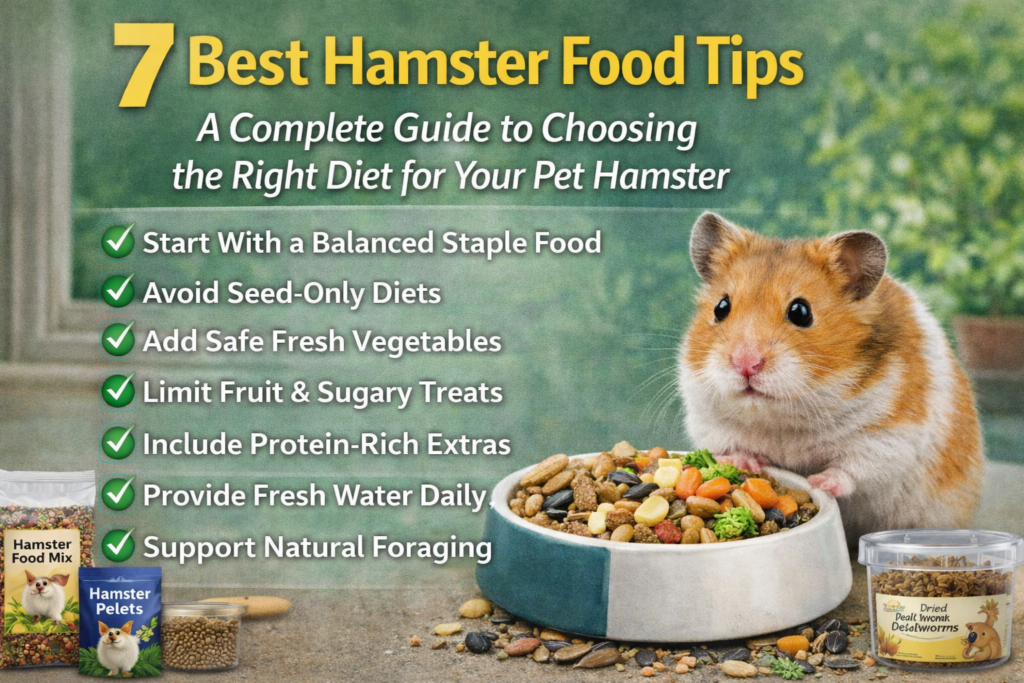
7 Best Hamster Food Tips: A Complete Guide to Choosing the Right Diet for Your Pet Hamster
Choosing the best hamster food is one of the most important things you can do for your pet’s health. Many people assume that any bag labelled for hamsters will do the job, but a proper hamster food guide shows that a healthy diet needs more than a random seed mix. Hamsters are omnivores, which means they eat a mix of plant foods and some animal-based foods, and leading pet-care sources recommend a balanced staple diet supported by small amounts of fresh vegetables, limited fruit, and occasional protein-rich extras. RSPCA says hamsters can be fed a compound pellet ration or a seed mixture formulated for their needs, along with small quantities of greens, cleaned root vegetables, and pieces of fruit such as apple, while warning that grapes and rhubarb should not be fed. VCA and PetMD go further by warning that strict seed-based diets are a poor choice because they are high in fat, encourage selective feeding, and can lead to obesity or nutrient deficiencies.
If you are searching for the best hamster food, you are probably also asking related questions like what do hamsters eat, what is the best diet for pet hamsters, are pellets better than seed mix, and what fresh foods are safe for hamsters. These are all parts of the same answer. The best hamster food is not one magic product. It is a balanced feeding routine built around a nutritionally reliable staple food, fresh water every day, a few safe fresh foods, and careful control of treats. RSPCA also notes that hamster food can be scattered or hidden around the enclosure to encourage natural foraging, and that hidden food should be checked and removed if it may go mouldy. That means the best food for hamsters should support both health and normal behaviour.
1. Start with a balanced staple food
The first rule of choosing the best hamster food is to begin with a balanced staple diet. Veterinary and welfare guidance consistently puts complete foods at the centre of a hamster’s diet. PetMD says commercial pellets should be the central part of a hamster’s diet because they are formulated to provide a well-rounded nutritional base. VCA says hamsters should be offered a pelleted diet made for hamsters and not a strict seed diet. PDSA likewise says the ideal hamster diet should reflect what they naturally eat, but still be designed in a balanced way for pet care.
This matters because the best hamster food should be dependable every day, not just appealing at first glance. Many colourful food mixes look exciting, but appearance can be misleading. Seed-heavy diets often let hamsters pick out their favourite fatty bits and ignore the rest. That means a hamster may seem to be eating well while actually getting an unbalanced diet. PetMD says seed-based diets should be used sparingly and as a supplement only to pellets, not as the main food. VCA says strict seed diets are high in fat and poor in nutrition, and that hamsters are prone to obesity.
So if you want the best hamster food with strong day-to-day nutrition, a good pelleted hamster diet or other complete hamster food should come first. In SEO terms and practical care terms, this is the foundation of the best diet for pet hamsters. It is much easier to build a healthy feeding plan around a reliable staple than around a mix your hamster may selectively eat.
2. Do not rely on a seed-only diet
One of the biggest feeding mistakes people make is assuming that a hamster seed mix is automatically the best hamster food. In reality, multiple veterinary sources warn against this. VCA says hamsters should never be fed a strict seed diet because seeds are high in fat and poor in nutrition. PetMD says seed-based diets do not provide the necessary nutrients and commonly lead to obesity and vitamin deficiencies.
This point is important because many owners think seeds seem natural, and in one sense they are. But a pet hamster is not choosing from a wide natural habitat. In a bowl, a hamster may simply choose the richest and fattiest items repeatedly. That is why the best hamster food should not be just a loose, fatty mix. A balanced staple prevents the most common problem with selective feeding.
If you do use a hamster seed mix, it is better to treat it as part of a broader feeding plan, not the full plan itself. RSPCA says a hamster may be fed a seed mixture formulated to meet their needs, which means quality and formulation matter. That is very different from feeding random seeds or relying on preference alone. The best hamster food is balanced first and interesting second, not the other way around.
3. Add safe fresh vegetables in small amounts
A healthy hamster diet should not be dry food only. Fresh foods can add variety, hydration, and enrichment when used in small amounts. RSPCA recommends small quantities of greens and cleaned root vegetables. PetMD says hamsters can be supplemented with fresh, uncooked vegetables, but that these foods should not be the mainstay of the diet. Examples listed by PetMD include greens, carrots, peas, pepper, and cucumbers.
This is where the best hamster food becomes more than a bag of pellets. A smart feeding routine uses a staple food as the nutritional base and then adds small fresh foods safely. Tiny portions of leafy greens, cucumber, carrot, peas, or pepper can make the diet more interesting without replacing the main food. That is important because the best food for hamsters should support both health and natural curiosity.
Fresh food does come with one extra responsibility. Hamsters like to store food, sometimes in hidden corners or bedding. RSPCA notes that hamsters naturally hoard food and that any hidden food that could go mouldy should be removed. So when you add fresh vegetables to the best hamster food plan, you also need to check the enclosure regularly and remove leftovers before they spoil.
4. Keep fruit limited and choose it carefully
Fruit is one of the areas where owners can easily overdo things. Yes, fruit can be part of the best hamster food plan, but only in small amounts. RSPCA says hamsters can have pieces of fruit such as apple, but warns that grapes and rhubarb should not be fed because they can be poisonous to rodents. NextGen RSPCA repeats that grapes and rhubarb can make hamsters sick. PetMD also warns against citrus fruits because they can cause gastrointestinal issues.
That means the best hamster food does not include lots of fruit treats just because hamsters seem to enjoy them. Sweet foods should stay limited. The healthiest routine is to use fruit as a tiny occasional extra, not as a daily feature of the diet. If you want the best diet for pet hamsters, think of fruit as a very small side item, not the foundation of nutrition.
A useful SEO answer to what do hamsters eat safely would therefore be: a proper staple food daily, fresh vegetables in small amounts, very limited fruit, and no grapes, rhubarb, or citrus. That is a more accurate and safer answer than simply telling owners that hamsters can eat “fruit and veg.”
5. Include occasional protein-rich treats
Because hamsters are omnivores, the best hamster food plan can also include occasional protein-rich extras. PDSA says the ideal hamster diet includes fresh veg and protein-packed treats like mealworms. This is useful because many people think only in terms of grains and seeds when they search for the best food for hamsters, but hamsters in the wild eat more broadly than that.
Protein extras should still be kept occasional. The best hamster food routine does not mean constantly adding rich extras. Instead, mealworms or similar hamster-safe protein treats can be used in moderation to add variety and enrichment. When used this way, they fit well into a broader hamster food guide that prioritizes balance over excess.
This is especially important for owners who want a more natural-feeling pet hamster diet without falling back on high-fat seeds all the time. Protein treats can help make the feeding routine more complete, but they should always stay secondary to the main staple food.
6. Fresh water matters as much as food
Even though the keyword is best hamster food, no serious diet guide is complete without water. NextGen RSPCA says you should always keep your hamster’s bottle topped up and check the tube daily for blockages. Without constant access to clean water, even the best hamster food cannot support good health.
This is one of the easiest things for owners to overlook. A bottle may look full from outside, but the tube can still be blocked. A hamster that cannot drink properly is at risk quickly. So a true healthy hamster diet always includes daily water checks as part of the feeding routine.
If you are building a full hamster food guide, this point deserves a clear place. Good food plus poor water access is not good care. The best hamster food plan always includes a clean, working water source every day.
7. Feed in a way that supports natural foraging
The best hamster food should not only meet nutritional needs. It should also fit your hamster’s natural behaviour. RSPCA says hamster food can be put in a flat dish, but it can also be scattered or hidden around the cage to make mealtimes interesting and encourage natural foraging behaviours.
This is excellent advice because food is also enrichment. A hamster that has to search, collect, and store food is doing something natural and mentally engaging. So the best food for hamsters is not only about ingredients. It is also about how you offer the food. Scattering part of the daily ration can make mealtimes more active and less boring.
Of course, because hamsters hide food, owners still need to keep the enclosure clean and remove perishable hidden food. That balance between natural behaviour and good hygiene is a key part of a strong hamster feeding guide.
Foods to avoid in a hamster diet
A good article on the best hamster food should also make the “avoid” list very clear. Based on the sources above, hamster owners should avoid:
- strict seed-only diets
- too much fruit
- grapes
- rhubarb
- citrus fruits
- spicy foods
- unsuitable human junk foods or processed foods not known to be safe for hamsters
This matters because many feeding mistakes come from trying to give hamsters treats too often. The best hamster food is not the most indulgent food. It is the food plan that supports long-term health, healthy weight, and good daily nutrition. VCA specifically notes that hamsters are prone to obesity, which is another reason to keep fatty and sugary items under control.
Final thoughts on the best hamster food
The simplest answer to what is the best hamster food is this: a balanced staple diet should come first, ideally a complete pelleted hamster food or another properly formulated hamster diet, while fresh vegetables, limited fruit, and occasional protein-rich extras should stay in supporting roles. That overall approach is the most consistent message across RSPCA, VCA, PDSA, and PetMD.
So if you want the best hamster food with strong keyword relevance and real pet-care value, focus on balance. Choose a reliable main food, avoid seed-only feeding, add safe fresh foods in small amounts, keep treats limited, provide fresh water daily, and feed in a way that supports natural foraging. That is the best hamster food strategy for a healthy, happy pet hamster.
If you want, I can also format this into a full copy-paste SEO post package with meta title, meta description, slug, tags, FAQ schema, and image alt text.