
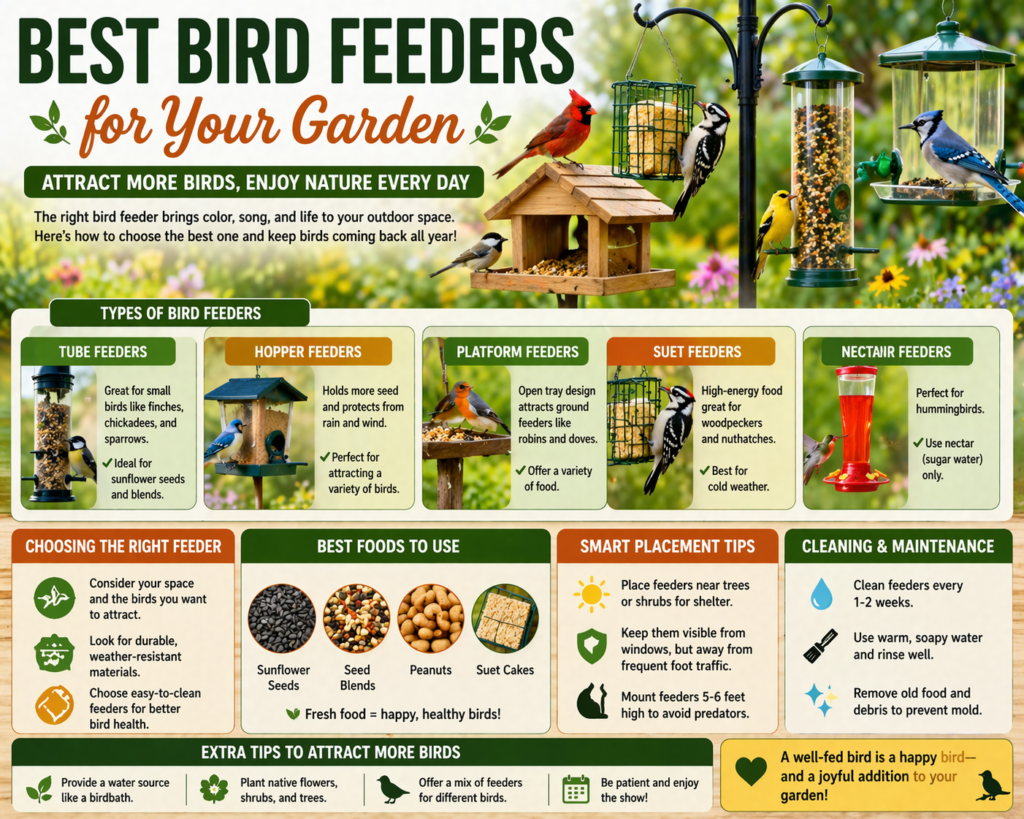
Best Bird Feeders for Your Garden
Best bird feeders for your garden helps transform an ordinary yard into a livelier, more welcoming outdoor space where birds return regularly and homeowners enjoy more movement, colour, and natural activity throughout the day.
Best bird feeders for your garden should be chosen with both birds and people in mind, because a feeder must be easy to use, easy to clean, and reliable in changing weather if it is going to work for months instead of days.
Best bird feeders for your garden matter because different species feed in different ways, and the right design can encourage more visits from finches, sparrows, robins, tits, doves, and other common garden birds.
Best bird feeders for your garden are not always the fanciest models on the market, because practical design, fresh food protection, and simple maintenance usually make a bigger difference than decorative extras or unusual shapes.
Best bird feeders for your garden often include tube designs for smaller birds, since these models are compact, tidy, and effective for sunflower seed and mixed seed without taking up too much room in the garden.
Best bird feeders for your garden can also include hopper styles, which store more food and allow several birds to feed at once, making them a strong option for medium and large gardens with steady bird traffic.
Best bird feeders for your garden become even more effective when platform or tray feeders are added, especially if the goal is to attract birds that prefer open feeding areas rather than narrow ports or fixed perches.
Best bird feeders for your garden should match the type of food you plan to offer, because peanuts, suet, mealworms, sunflower seed, and mixed seed all work better when paired with the correct feeder style.
Best bird feeders for your garden need good drainage and some protection from rain, since damp food spoils quickly and can reduce bird activity while also creating waste, mould, and unnecessary cleaning work.
Best bird feeders for your garden perform best when placed near light natural cover such as shrubs or small trees, because birds like safe access and quick escape routes if they feel threatened while feeding.
Best bird feeders for your garden should never be hidden too deeply inside dense planting, because overly sheltered spots can make birds nervous if predators have too many places to hide nearby.
Best bird feeders for your garden work better when they are visible from inside the house, since watching birds from a kitchen window, dining area, or patio often becomes one of the most enjoyable parts of garden feeding.
Best bird feeders for your garden can suit large yards, small gardens, courtyards, patios, and balconies, which makes bird feeding possible for almost any home if the feeder size and mounting style are chosen carefully.
Best bird feeders for your garden should be made from durable materials that can handle outdoor conditions, and that usually means metal, treated wood, or sturdy plastic rather than flimsy decorative construction.
Best bird feeders for your garden may need squirrel-resistant features in areas where squirrels are bold and persistent, because food theft, damaged feeders, and daily mess can become frustrating very quickly.
Best bird feeders for your garden are easier to manage when mounted on a proper pole, hook, or station that keeps them stable, accessible, and less vulnerable to strong wind or awkward placement.
Best bird feeders for your garden should be cleaned regularly because old husks, droppings, moisture, and spoiled food can build up faster than most people expect, especially during wet or humid weather.
Best bird feeders for your garden only remain useful when maintenance is consistent, and that means checking seed freshness, washing surfaces, and clearing food waste below the feeder before hygiene becomes a problem.
Best bird feeders for your garden can still be affordable, since a modest feeder with strong construction and simple access often performs better than an expensive model that looks attractive but becomes difficult to refill or wash.
Best bird feeders for your garden support better bird activity when the surrounding garden also offers water, resting places, and some protective planting, because feeders work best as part of a larger wildlife-friendly space.
Best bird feeders for your garden help build a routine for local birds, and once birds learn that food is reliable, they often return at similar times each day and make the garden feel much more active.
Best bird feeders for your garden are especially useful in colder months, when natural food sources may be limited and birds benefit from regular access to seed and higher-energy options such as suet.
Best bird feeders for your garden still matter in warmer seasons, because birds continue to use safe feeding points when the food remains clean, dry, and suitable for the species visiting your area.
Best bird feeders for your garden should be selected based on the birds you actually want to attract, since one feeder may be perfect for finches while another is better for robins, doves, or woodpeckers.
Best bird feeders for your garden can create a richer birdwatching experience when more than one feeder type is used, because variety in food and design usually brings a wider mix of species into the same space.
Best bird feeders for your garden do not have to overwhelm the garden visually, because neat modern shapes, natural wood finishes, and simple hanging lines can blend well with both traditional and contemporary outdoor designs.
Best bird feeders for your garden often reward patience, since bird activity may build gradually as local species become familiar with the feeder location, food type, and general safety of the space.
Best bird feeders for your garden should be placed where spilled seed will not become a daily annoyance, especially near doors, seating areas, or narrow paths where waste can collect quickly.
Best bird feeders for your garden are more successful when food is topped up in sensible amounts instead of being overfilled, because too much seed can become stale before birds have a chance to eat it.
Best bird feeders for your garden can make family gardens feel more educational and enjoyable, especially for children who begin noticing feeding patterns, seasonal changes, and differences between visiting species.
Best bird feeders for your garden should always put bird welfare first, which means safe access, clean food, and regular care are more important than simply having the largest or most decorative feeder in the neighbourhood.
Best bird feeders for your garden make small spaces feel more connected to nature, and even one compact hanging model can add life to a balcony or tiny courtyard when it is maintained properly.
Best bird feeders for your garden help larger gardens feel organised when grouped into a feeding area, where seed, suet, and tray options work together instead of being scattered randomly around the yard.
Best bird feeders for your garden are worth choosing carefully because the right feeder can improve both the health of visiting birds and the daily enjoyment of the people who share the garden with them.
Best bird feeders for your garden Before you buy, compare cleaning access, weather protection, and mounting options, because those simple details often matter more than appearance when you are choosing the right feeder.
Best bird feeders for your garden Start small if you are unsure, then expand once you learn which birds visit most often and which foods disappear first in your specific outdoor space.
Best bird feeders for your garden Keep records of what works in each season, because bird activity, food preference, and feeder use can change as weather and breeding cycles shift during the year.
Best bird feeders for your garden In the long run, careful placement and steady maintenance will do more for your success than buying a large number of feeders all at once.
A well-chosen feeder does more than decorate a lawn or patio. It changes how the whole space feels. When birds begin to visit regularly, even a quiet garden becomes more dynamic. Morning activity increases, natural sounds become more noticeable, and the area starts to feel less empty. This is one of the biggest reasons homeowners invest in bird feeding in the first place. They want a garden that feels alive, and good feeder choices make that possible.
Different designs suit different goals. If you mainly want neat feeding and easy cleaning, a slim tube model is often a smart starting point. If you want several birds feeding together, a hopper design usually works better. If variety is the priority, then a tray feeder can add flexibility and attract species that avoid narrow perches. In most cases, success comes from matching the feeder style to the type of food and the bird behaviour you expect to see in your area.
Food quality has a direct impact on results. Fresh seed attracts repeat visits, while damp or stale food usually does the opposite. Sunflower seed is often one of the safest starting points because it appeals to many common garden birds. Suet is useful in colder weather, and peanuts can bring in species that prefer richer food. The goal is not to offer everything at once, but to begin with one or two suitable foods and then adjust based on what birds actually use.
Cleaning should never be treated as an afterthought. Feeders that are ignored for too long can become unhygienic, and that reduces the value of even the best setup. A simple routine is usually enough: remove old food, rinse the feeder, let it dry, and check the ground below for waste buildup. This habit protects bird health, improves feeding conditions, and helps your chosen feeder last much longer.
Good placement makes a major difference. Birds like an area that feels safe but not too enclosed. A feeder near a hedge, shrub, or small tree often works well because birds have somewhere to retreat quickly. At the same time, they still need visibility so they can watch for threats. That balance is why careful placement matters almost as much as feeder design. Even a high-quality product will underperform if it is placed badly.
Another useful tip is to treat bird feeding as part of a larger wildlife-friendly plan. Water, cover, and food work best together. A bird bath, a few native plants, or a quiet corner with shelter can increase feeder use more than many people realise. Feeders are most effective when they are not the only attractive feature in the garden. They work best as part of a space where birds already feel comfortable staying longer.
For beginners, there is no need to overcomplicate the process. Start with one solid feeder, use fresh food, keep it clean, and watch what happens. Over time, you will learn which species visit most often, which foods disappear first, and whether your current setup needs to expand. Bird feeding becomes easier and more enjoyable when decisions are based on observation rather than guesswork.
FAQs
What type of feeder is best for small spaces?
Compact hanging and tube models are often best bird feeders for your garden for balconies, patios, and small courtyards.
How often should feeders be cleaned?
In most cases, best bird feeders for your garden should be checked weekly and cleaned whenever food becomes damp or dirty.
Where should feeders be placed?
For the best results, best bird feeders for your garden should be set near light cover but away from obvious predator hiding spots.
Is one feeder enough?
Yes, but many people find that combining best bird feeders for your garden with different food types attracts more variety.