
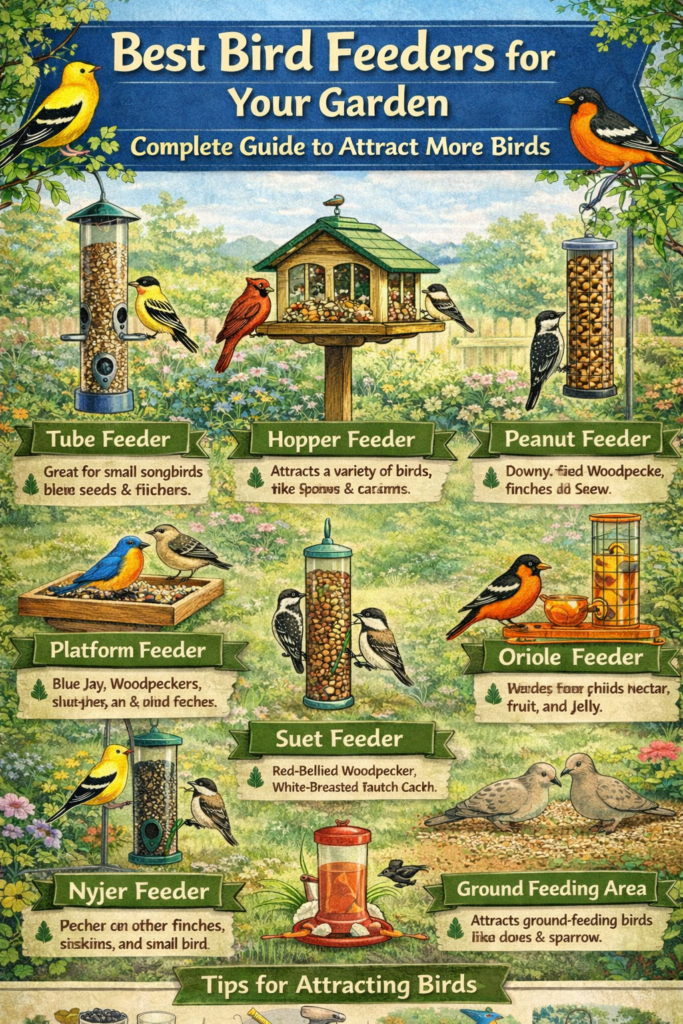
Best Bird Feeders for Your Garden: Complete Guide to Attract More Birds
Adding a bird feeder to your outdoor space is one of the easiest ways to bring more life, colour, and movement into your garden. Whether you have a large backyard, a small patio, or a quiet corner with a few shrubs, the right feeder can turn your space into a regular stop for wild birds. Many people start bird feeding with a simple feeder and a handful of seed, but choosing the right feeder makes a much bigger difference than most beginners expect. That is why learning about the best bird feeders for your garden is so useful.
Different birds prefer different feeding styles. Some enjoy clinging to narrow feeding ports, while others prefer a flat tray or a sheltered hopper filled with seed. Some birds feed on suet, while others prefer nyjer seed, sunflower seed, or mixed seed. The wrong feeder can lead to wasted food, fewer visitors, and more mess under the feeding area. The right feeder, however, can attract a wider range of birds and make feeding easier to manage throughout the year.
This guide explains the best bird feeders for your garden, the main feeder types, what birds they attract, how to choose the right one, where to place it, and how to keep it clean. If you want a bird-friendly garden that stays active and enjoyable, choosing the right feeder is the best place to start.
Why Choosing the Right Bird Feeder Matters
A bird feeder is not just a container for seed. It affects which birds visit, how easily they can feed, and how much food is wasted. That is why understanding the best bird feeders for your garden is important for anyone who wants better results.
A poorly chosen feeder may allow seed to get wet, fall to the ground, or attract birds you were not trying to feed. It may also be difficult to clean, too exposed to weather, or too awkward for certain species to use. On the other hand, a well-designed feeder protects food, suits the birds in your area, and helps create a cleaner and more efficient feeding routine.
The best choice depends on your goals. Some people want to attract finches. Others want to bring in cardinals, robins, sparrows, or woodpeckers. Some want less mess. Others want a feeder that is easy to refill and maintain. By understanding the best bird feeders for your garden, you can choose something that fits both your garden and the birds you hope to attract.
Tube Feeders
Tube feeders are among the most popular options when discussing the best bird feeders for your garden. They are long, narrow feeders with several feeding ports along the sides. They are usually designed for small seeds such as sunflower hearts, sunflower seed, or nyjer, depending on the model.
Tube feeders are a strong choice for attracting small clinging birds such as finches, tits, chickadees, and nuthatches. Because they are compact and easy to hang, they work well in many garden sizes. They also help reduce seed waste compared with open feeders, since the food stays more protected.
Another advantage is that many tube feeders are easy to refill and monitor. You can often see how much seed is left, which makes feeding more convenient. For many households, tube feeders are one of the best bird feeders for your garden because they are simple, practical, and attractive to a good range of species.
Hopper Feeders
Hopper feeders are another popular option among the best bird feeders for your garden. These feeders often look like small wooden or plastic houses with a covered roof and seed reservoir inside. Seed gradually drops into a feeding tray as birds eat.
Hopper feeders are excellent for mixed seed, sunflower seed, or safflower seed. They are often favoured by medium-sized birds such as cardinals, grosbeaks, sparrows, doves, and jays. Because they hold a larger amount of food, they are useful for people who do not want to refill feeders constantly.
One of the reasons hopper feeders are considered among the best bird feeders for your garden is their weather protection. The roof helps shield food from rain, which can reduce spoilage. They also look attractive in traditional garden settings and can become a decorative feature as well as a practical one.
Tray Feeders
Tray feeders, also called platform feeders, are very simple and versatile. They consist of a flat feeding surface, sometimes with raised edges or a roof. They can be mounted on poles, hung, or placed on railings.
These feeders are often listed among the best bird feeders for your garden because they attract a wide variety of birds. Sparrows, doves, robins, blackbirds, jays, and other ground-feeding or open-feeding species often use tray feeders readily. They can hold mixed seed, sunflower hearts, mealworms, fruit, or peanuts depending on the feeder design.
The main advantage of tray feeders is flexibility. You can offer different foods and attract birds that may avoid narrower feeders. However, they usually need more frequent cleaning and protection from rain. Food is more exposed, and mess can build up faster. Even so, for bird lovers who want to attract many types of birds, tray feeders remain one of the best bird feeders for your garden.
Suet Feeders
Suet feeders are designed for fat-based bird food, which is especially useful in colder months or during times when birds need extra energy. These feeders usually hold suet cakes, fat balls, or blocks. They are often made from metal cages or sturdy holders.
When discussing the best bird feeders for your garden, suet feeders are important because they attract birds that may not visit seed feeders as often. Woodpeckers, starlings, tits, nuthatches, and some wrens are often drawn to suet. In winter, they can become one of the busiest feeders in the garden.
Another reason suet feeders rank among the best bird feeders for your garden is seasonal value. Even if seed feeders are quieter during certain times, suet can continue to attract active visitors. This makes it a useful addition to a broader bird feeding setup.
Nyjer Feeders
Nyjer feeders are specially designed for very small nyjer seeds. They often look like fine-mesh socks or narrow tube feeders with tiny feeding ports. These feeders are especially popular for attracting finches.
If your main goal is to bring in goldfinches and other small seed-eating birds, nyjer feeders may be among the best bird feeders for your garden. They allow small birds to feed comfortably while reducing waste of tiny seed. Because nyjer is lightweight and fine, it needs a suitable feeder rather than a general-purpose one.
These feeders are often most effective when placed in quiet, visible spots where small birds feel safe.
Window Feeders
Window feeders are attached directly to a window using suction cups. They are a great choice for people with limited outdoor space or for those who want a close-up view of visiting birds.
While they may not be the first choice for every household, they still deserve a place in any guide to the best bird feeders for your garden because they offer a very personal birdwatching experience. They work especially well in flats, small homes, or urban gardens. Small birds such as tits, sparrows, and finches often use them.
The biggest advantage is visibility. If you enjoy watching birds from indoors, a window feeder can provide a clear and rewarding view without needing a large outdoor setup.
Ground Feeders
Some birds prefer feeding closer to the ground. Ground feeders or low tray feeders are useful for species such as doves, blackbirds, robins, juncos, and some sparrows. These feeders are usually flat and open, with a design that keeps food slightly raised from soil level.
Ground feeding should always be done carefully, but these feeders can still be among the best bird feeders for your garden if you regularly see ground-feeding species in your area. They are especially helpful if elevated feeders do not seem to attract the birds you want.
Best Bird Feeders for Different Garden Goals
The best bird feeders for your garden depend partly on what you want from bird feeding.
If you want a feeder for small songbirds, tube feeders are often an excellent choice.
If you want a general-purpose feeder for mixed species, hopper feeders are very practical.
If you want to offer a range of foods, tray feeders are highly flexible.
If you want to support birds in winter, suet feeders are especially useful.
If you want close-up views, window feeders are ideal.
If you want to attract ground-feeding birds, low tray or ground feeders work best.
This is why many experienced bird lovers do not rely on just one type. A mix of feeder styles often gives the best overall results.
What Makes a Good Bird Feeder?
When choosing from the best bird feeders for your garden, there are a few practical features to look for.
A good bird feeder should be easy to clean. Hygiene matters because dirty feeders can spread disease among birds. The feeder should also be easy to refill, sturdy enough for outdoor use, and designed to keep food as dry as possible. Weather resistance is important, especially in rainy or windy places.
Another useful feature is seed control. Some feeders are designed to reduce spillage and stop large amounts of food from being wasted. This can save money and keep the garden tidier. Strong perches, secure hanging points, and a sensible size also make a feeder easier to use and maintain.
Where to Place Bird Feeders in Your Garden
Placement matters almost as much as feeder type. Even the best bird feeders for your garden may not work well if they are placed in the wrong spot. Birds need to feel safe. If the feeder is too exposed, too busy, or too close to constant noise, birds may avoid it.
A good position is often somewhere visible but sheltered, ideally near shrubs or trees where birds can perch and retreat quickly if needed. At the same time, the feeder should not be hidden so deeply that it becomes hard for birds to see.
It is also a good idea to avoid placing feeders too close to areas where food can get wet repeatedly. Stable hanging points and easy access for refilling are important too.
Keeping Bird Feeders Clean
Any guide to the best bird feeders for your garden should include cleaning. A good feeder can only stay useful if it is maintained properly. Old seed, droppings, and damp food can lead to hygiene problems and make birds less likely to return.
Feeders should be cleaned regularly, dried properly, and refilled with fresh food. Tray feeders usually need cleaning more often because they are more exposed. Suet holders should also be checked for buildup. If seed gets wet or mouldy, it should be removed immediately.
Clean feeders support healthier birds and a more pleasant garden feeding area.
Common Mistakes to Avoid
When looking for the best bird feeders for your garden, many people focus only on appearance. While style is nice, function matters more. A feeder that looks beautiful but is hard to clean or refill may become frustrating quickly.
Another common mistake is using only one feeder style for every bird. Different species have different feeding habits, so variety often works better. Overfilling feeders is also a mistake, especially in wet weather, because food may spoil before birds finish it.
Poor placement, lack of cleaning, and choosing very cheap feeders that break easily are other problems to avoid.
Why Multiple Feeders Often Work Best
If you really want to make the most of the best bird feeders for your garden, using more than one feeder style is often the smartest approach. A tube feeder and a suet feeder, for example, can attract a wider range of birds than either one alone. Adding a tray feeder may bring in even more species.
Multiple feeders also reduce crowding. Birds can feed in different places, which may create a calmer and more natural feeding environment. Even in a modest garden, two well-chosen feeders can make a big difference.
Final Thoughts
Choosing the best bird feeders for your garden can completely change your bird feeding experience. The right feeder helps attract more birds, reduces waste, protects food, and makes garden birdwatching much more enjoyable. Tube feeders, hopper feeders, tray feeders, suet feeders, nyjer feeders, window feeders, and ground feeders all have their own strengths.
The best option depends on your space, your feeding goals, and the birds you want to attract. In many cases, the most successful setup includes more than one feeder type. By combining the right feeder with good placement, fresh food, and regular cleaning, you can create a garden that birds return to again and again.
FAQ
What is the best all-round bird feeder for a garden?
A hopper feeder or tube feeder is often one of the best all-round choices because each can attract a good variety of common garden birds.
Which bird feeder attracts the most birds?
Tray feeders can attract many kinds of birds because they can hold different foods, while hopper feeders and tube feeders are also very popular depending on the seed used.
Are metal or plastic bird feeders better?
Both can work well. The best choice is a feeder that is durable, easy to clean, weather-resistant, and suitable for the food you want to offer.
How many bird feeders should I have in my garden?
Many gardens benefit from more than one feeder type, especially if you want to attract different bird species.
Where should I hang a bird feeder?
Place it in a safe, visible, and slightly sheltered area, ideally near shrubs or trees where birds can perch and hide if needed.