
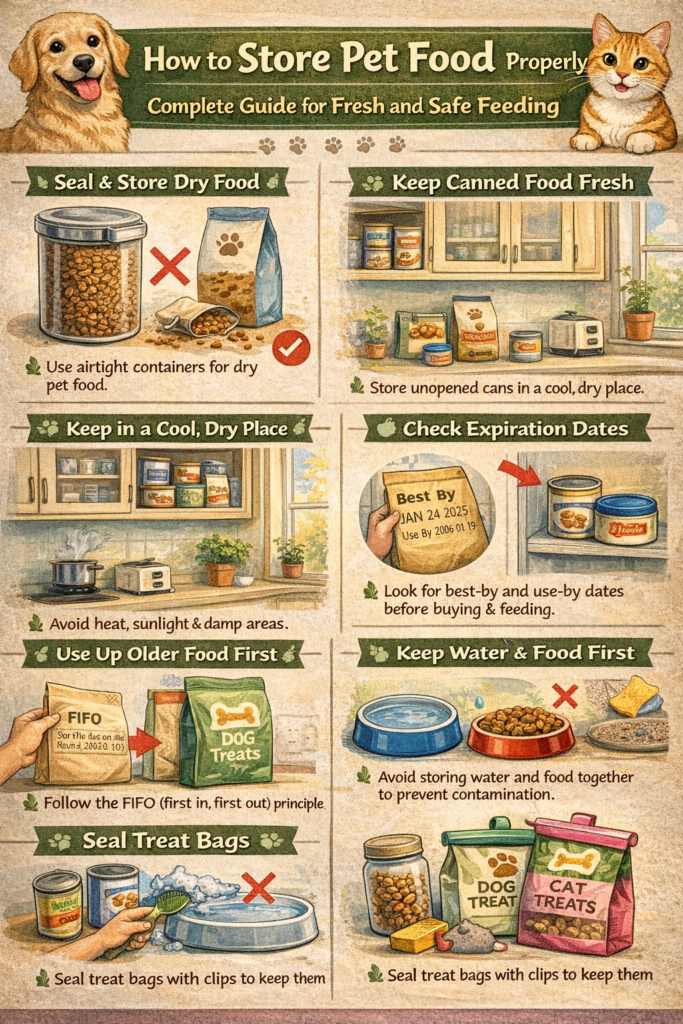
How to Store Pet Food Properly: Complete Guide to Keep It Fresh and Safe
Pet owners often spend a lot of time choosing the right food for their animals. They compare ingredients, look at nutrition labels, and search for the best food for their dog, cat, bird, rabbit, or other companion. However, one important part of pet care is often ignored after the food is brought home. That part is storage. Learning how to store pet food properly is essential because even high-quality food can lose freshness, smell bad, become contaminated, or spoil if it is stored the wrong way.
Many people think pet food storage is simple. They may leave the bag open in the kitchen, keep wet food uncovered in the fridge, or pour kibble into a container that has not been cleaned properly. These small habits can affect quality more than most people realise. Exposure to air, moisture, heat, light, and bacteria can reduce the safety and freshness of food over time. This is why understanding how to store pet food properly is not just helpful. It is part of responsible pet care.
Proper storage helps protect flavour, texture, and nutrients. It also reduces waste, saves money, and lowers the chance of insects, mould, or contamination. In this guide, you will learn how to store pet food properly for dry food, wet food, raw food, and treats, along with the most common mistakes to avoid.
Why Proper Pet Food Storage Matters
Food quality does not depend only on what happens at the factory. It also depends on what happens in your home after the package is opened. Once pet food is exposed to air, it begins to change. Dry food can lose crispness and freshness. Wet food can spoil quickly. Treats can harden, soften, or go stale. Raw diets can become unsafe if they are not handled carefully.
This is why it is important to understand how to store pet food properly from the moment you open the package. Proper storage helps maintain the food’s normal smell, taste, and texture. It also helps preserve nutritional quality. Pets can be surprisingly sensitive to changes in food freshness. Some may refuse stale food, while others may still eat it even when it is no longer ideal.
Another major reason storage matters is hygiene. Food that is stored carelessly can attract ants, beetles, rodents, or mould. These risks can affect not only your pet’s meals but also the cleanliness of your home. When you know how to store pet food properly, you create a safer feeding routine for everyone.
How to Store Dry Pet Food Properly
Dry food is one of the easiest pet foods to store, but it still requires care. Many owners assume that kibble can simply stay in an open bag until it is finished. That is a mistake. Dry food contains fats and oils that can break down over time when exposed to air and heat. Moisture can also affect texture and safety.
A key part of learning how to store pet food properly is keeping dry food in a cool, dry place away from direct sunlight. The best locations are usually indoor cupboards, pantries, or shelves in rooms with steady temperatures. Garages, outdoor sheds, balconies, or laundry rooms may not be ideal if they become hot or humid.
The food should also be sealed after each use. If the bag has a strong resealable top and is kept protected, that may be enough for some owners. However, many people use a storage bin for better protection. The goal is to reduce exposure to air and moisture while keeping pests out.
Should You Keep Dry Food in the Original Bag?
Yes, in many cases this is the best option. One of the smartest tips for how to store pet food properly is to keep dry food in its original bag and then place that bag inside an airtight container. This gives the food two levels of protection.
The original bag is made to help preserve freshness and often contains useful details such as the batch number, expiry date, feeding guide, and product information. If there is ever a recall or quality issue, those details are important. Also, if you pour kibble directly into a container, the oils from the food may coat the inside of the bin over time, which can lead to odour and residue buildup.
So instead of throwing the bag away, a better approach is to place the whole bag into a clean bin. This makes daily feeding easier while also following the basics of how to store pet food properly.
Choosing the Right Storage Container
If you use a storage bin, choose one that is clean, dry, food-safe, and airtight. The lid should seal firmly. The material can be plastic or metal, as long as it is suitable for food use and easy to wash. The size should also match the amount of food you buy so that the bag fits comfortably or the food is not loosely exposed to too much air.
A good container supports how to store pet food properly by protecting the food from moisture, dust, insects, and light. However, the container itself also needs care. It should be washed and dried fully before a new bag of food is added. If you keep pouring fresh food onto old crumbs and oily residue, you are lowering the quality of the new food.
A clean container makes a real difference. It helps keep food fresher and prevents buildup that can affect smell and hygiene.
How to Store Wet Pet Food Properly
Wet food is more delicate than dry food, so it needs quicker and more careful handling. Once opened, wet food should not be left sitting out for long. It begins to spoil much faster, especially in warm temperatures.
If you want to understand how to store pet food properly, remember this rule for wet food: refrigerate unused portions quickly. You can keep leftover food in the original can if you use a fitted lid, or you can transfer it to a sealed food-safe container. The aim is to protect it from drying out and from absorbing smells from other foods in the fridge.
When serving refrigerated wet food later, some pets may prefer it slightly warmed to room temperature. That is fine, but it should not be left out for an extended period. Any food your pet does not finish should be removed rather than left sitting in the bowl all day.
Wet food storage is a major part of how to store pet food properly because poor wet food handling can lead to spoilage very quickly.
How to Store Raw Pet Food Properly
Raw diets require the strictest storage habits of all. If you feed raw food, then understanding how to store pet food properly becomes even more important because raw products are highly perishable and must be handled like fresh meat.
Raw pet food should be kept frozen or refrigerated according to the product directions. Frozen food should be thawed safely in the fridge, not left on the kitchen counter for long periods. Once thawed, it should be used within the recommended time. Bowls, utensils, worktops, and hands should be cleaned carefully after handling.
This is not only about freshness. It is about food safety. Raw feeding may suit some households, but it demands much more attention to hygiene. A careless approach can create risks for both pets and people.
How to Store Pet Treats Properly
Many owners focus on main meals and forget that treats also need proper storage. Treats can become stale, lose texture, dry out, or become too soft depending on the type. Some also contain fats that can go bad over time.
A simple rule for how to store pet food properly is to treat snacks and biscuits with the same care as regular food. Keep them sealed in their original pack if it closes properly, or transfer them to a clean container with a tight lid. Store them in a cool, dry place away from sunlight.
Homemade treats need even more attention. Some may need refrigeration, especially if they contain meat, dairy, or soft ingredients. Always check what type of treat you are storing and choose the right method for it.
Keep Food Away From Heat, Moisture, and Sunlight
One of the most practical lessons in how to store pet food properly is understanding the role of the environment. Heat speeds up spoilage. Moisture encourages mould and bacterial growth. Sunlight can warm the food and reduce quality over time. Even the best container will not fully protect pet food if it sits in a poor location.
Choose a storage area that stays cool and dry throughout the day. Avoid placing food near ovens, windows, radiators, dishwashers, or damp corners. In hot climates, this becomes even more important. A stable indoor spot is usually the safest choice.
Do Not Mix Old Food With New Food
A common mistake is topping up a food container when older food is still sitting at the bottom. This may seem convenient, but it is not a good habit. Older crumbs and oils can remain in the bin for too long and affect the freshness of the new batch.
A better way to follow how to store pet food properly is to empty the bin first, clean it, dry it fully, and then add the new food. This helps you rotate food properly and reduces the chance of stale residue building up over time.
Fresh food should not be mixed with leftovers from the previous bag unless the storage area is completely clean and the food is being rotated carefully.
Check Expiry Dates and Product Information
Another important part of how to store pet food properly is checking dates. Always look at the best-before date when you buy pet food and again before feeding it. Storage cannot fix food that is already too old. It can only help preserve food that is still in good condition.
Keeping the original packaging also helps you keep track of brand details, lot numbers, and ingredients. This is useful if your pet has a reaction or if there is a product recall. Food safety is easier to manage when you keep that information available.
Watch for Signs of Spoilage
Even if you do your best, pet food can still go bad if it was stored poorly before purchase or left open too long after opening. That is why owners should get used to checking food before serving it.
Dry food that smells stale, feels damp, looks oily, or shows signs of mould should not be used. Wet food that smells sour, changes colour, or develops an unusual texture should be thrown away. Treats that no longer smell normal or feel very different may also be past their best.
A big part of how to store pet food properly is being observant. Trust your senses. If something seems wrong, it is safer not to feed it.
Clean Bowls, Scoops, and Feeding Areas Too
Storage is not just about containers. It is also about the full feeding routine. If you scoop fresh food with a dirty cup or serve meals in bowls that are not washed properly, hygiene problems can still develop.
A complete approach to how to store pet food properly includes washing bowls regularly, especially for wet or raw food. Scoops should be kept clean and dry. Feeding mats and surrounding areas should also be wiped often. Fresh food should be served in a clean environment.
Tips for Multi-Pet Homes
Homes with several pets often have different food types for different animals or life stages. A puppy may eat one formula, an adult dog another, and a cat something completely different. In such homes, good organisation is essential.
If you have multiple foods, label containers clearly or keep each product in its original bag inside separate bins. This is one of the easiest ways to apply how to store pet food properly without confusion. It prevents mix-ups and makes daily feeding faster and safer.
Common Mistakes to Avoid
Many problems happen because of simple habits. The most common mistakes include leaving bags open, storing food in hot rooms, using dirty bins, ignoring dates, mixing old food with new food, and keeping wet food out too long.
Avoiding these mistakes is a big part of understanding how to store pet food properly. Good storage does not need to be complicated. It just needs consistency.
Final Thoughts
Learning how to store pet food properly is one of the easiest and most useful ways to improve your pet’s feeding routine. Good storage keeps food fresh, safe, and more appealing. It protects nutrition, reduces waste, and helps prevent spoilage or contamination.
Whether you feed dry food, wet food, treats, or raw meals, the same principles apply. Keep food away from air, heat, light, and moisture. Use clean containers. Keep original packaging when possible. Refrigerate leftovers quickly. Watch for spoilage. Clean bowls and scoops regularly.
When you follow these simple habits, you protect the quality of every meal you serve. That is the real value of knowing how to store pet food properly.
FAQ
How should dry pet food be stored?
Dry pet food should be kept in a cool, dry place in its original bag or in a sealed container.
Can I store kibble in a plastic bin?
Yes, but it is often better to keep the original bag inside the bin for extra protection and product information.
How long can wet pet food stay out?
Wet food should not stay out for long. Unused portions should be covered and refrigerated soon after opening.
Is the garage a good place to store pet food?
Usually not, especially if it gets hot, damp, or has unstable temperatures.
Why does pet food go stale?
Pet food goes stale when it is exposed to air, heat, light, and moisture over time.