
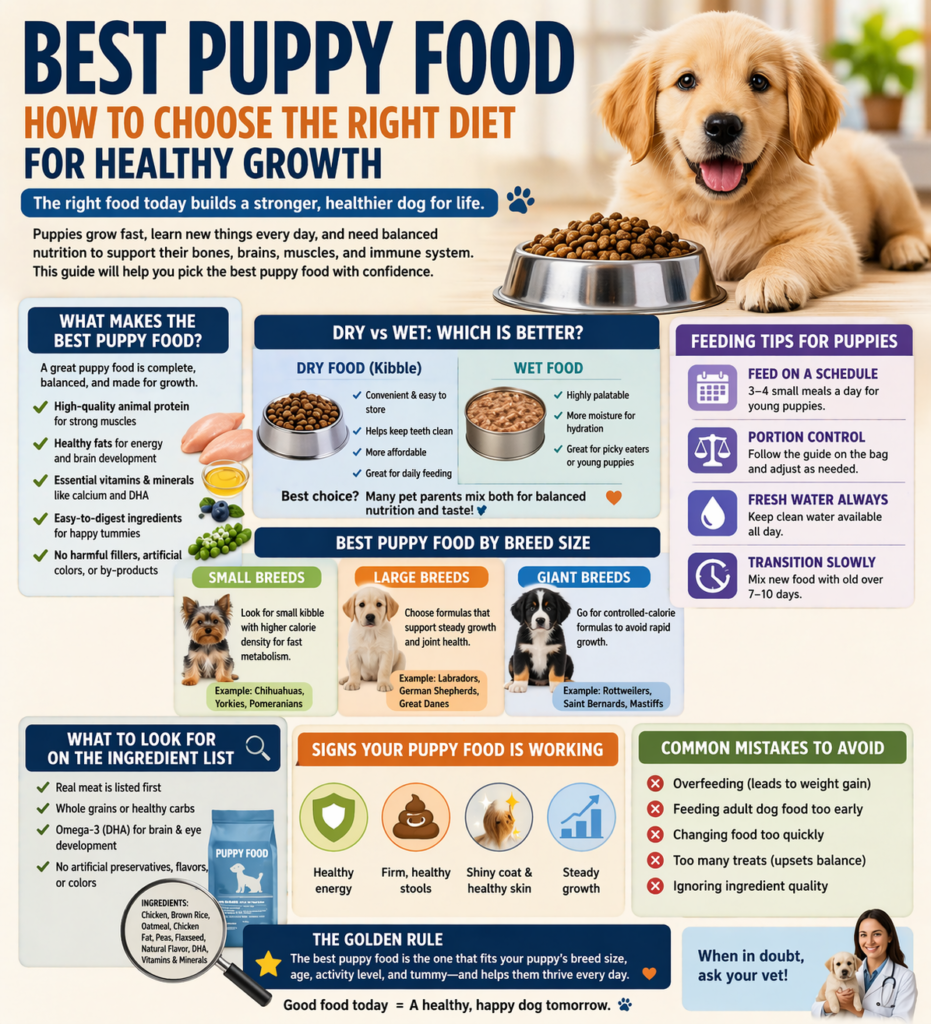
Best Puppy Food: Complete Guide to Choosing the Right Food for Your Puppy
Choosing the best puppy food is one of the most important decisions you will make as a dog owner. During the first year of life, puppies grow rapidly, use a huge amount of energy, and need the right balance of nutrients to build strong bones, healthy muscles, a resilient immune system, and good digestion. That is why the best puppy food is not simply adult dog food in a smaller serving. A growing puppy needs a formula designed for development, not maintenance.
Many people start searching for the best puppy food and quickly become confused. One product claims to be natural, another promises high protein, and another says it is ideal for a particular breed or body size. Some owners then start comparing dry food, wet food, grain-free food, large-breed formulas, and sensitive-stomach recipes all at once. The result is often too much information and not enough clarity. The truth is that the best puppy food is the one that supports healthy growth, suits your puppy’s breed size, and works well with your puppy’s digestion, appetite, and daily routine.
In this guide, you will learn what makes the best puppy food, how to compare dry and wet formulas, how small breeds and large breeds differ, what to do if your puppy has a sensitive stomach, and how to build a feeding plan that supports healthy development from the beginning.
Why the Best Puppy Food Matters
The first year of life is a critical stage for development. During this time, a puppy’s body is changing quickly. Bones are lengthening, joints are forming, muscles are growing, teeth are developing, and the immune system is becoming stronger. At the same time, the brain is still developing, which means nutrition affects learning, focus, and energy as well as physical growth. That is why the best puppy food plays such a major role in your dog’s future health.
A poor diet during puppyhood can lead to weak body condition, unstable energy, poor stool quality, coat problems, and growth that is either too slow or too fast. The best puppy food helps prevent those problems by supporting steady, balanced growth rather than unhealthy weight gain or nutritional gaps. It also helps puppies develop healthy eating routines and more predictable digestion.
This is especially important for larger breeds, which need controlled growth, and for smaller breeds, which often need more concentrated nutrition in smaller portions. In both cases, the best puppy food supports healthy development without overfeeding or underfeeding.
What Makes the Best Puppy Food?
The best puppy food is usually a complete and balanced growth formula made specifically for puppies. It should contain enough quality protein to support muscle growth, enough healthy fat to provide energy, and the right balance of vitamins and minerals to support bones, teeth, brain function, and immunity.
A strong formula often includes named animal protein sources such as chicken, lamb, salmon, or turkey. It should also contain appropriate levels of calcium and phosphorus, since these minerals are essential for skeletal development. The best puppy food should also be easy to digest. Even a formula that looks excellent on paper can be a poor choice if it repeatedly upsets your puppy’s stomach.
Texture matters too. The best puppy food for a tiny breed may need smaller kibble, while a larger puppy may manage standard puppy kibble easily. Taste matters as well. If a puppy refuses food or eats poorly, even a nutritionally sound formula may not be the most practical choice.
In simple terms, the best puppy food is balanced, digestible, appropriate for growth, and easy for your puppy to eat consistently.
Best Puppy Food: Dry or Wet?
One of the most common questions owners ask is whether the best puppy food should be dry or wet. The good news is that both can work well if the formula is designed for growth.
Dry food is often the most practical option. It is easy to store, easy to measure, and usually more affordable over time. Many owners choose kibble because it helps create a regular feeding routine. The best puppy food in dry form can work very well for daily feeding, especially if you want convenience and consistent portion control.
Wet food has different advantages. It is usually softer, more aromatic, and more appealing for fussy puppies. The best puppy food in wet form may be useful for dogs that need extra encouragement to eat or for younger puppies transitioning from softer meals after weaning. Wet food also contains more moisture, which some owners prefer.
For many households, the best puppy food may involve a mixed approach. Some owners use dry food as the base and add a small amount of wet food for flavor and variety. The key point is not whether the food is dry or wet. The key point is whether it is complete, balanced, and suitable for puppy growth.
Best Puppy Food for Small Breeds
Small breed puppies often need a more concentrated feeding approach. Their metabolisms are fast, their stomachs are small, and they may need more nutrition in a smaller amount of food. That is why the best puppy food for a small breed is usually more energy-dense and easier to chew.
The best puppy food for toy and small breeds often includes smaller kibble size, digestible ingredients, and slightly more concentrated calories per serving. Puppies such as Chihuahuas, Yorkies, Shih Tzus, Pomeranians, and Maltipoos may do better on formulas made specifically for smaller puppies because those recipes are designed for small mouths and smaller meal sizes.
Meal timing can also matter more for tiny breeds. The best puppy food still needs to be fed in suitable portions across the day, especially during the earliest months, when small dogs may need more regular meals than larger ones.
Best Puppy Food for Large Breeds
Large breed puppies need careful nutritional balance. The best puppy food for a large puppy should support steady development rather than rapid growth. This matters because large dogs place more strain on their bones and joints while growing, and too many calories or poorly balanced minerals can increase that strain.
Breeds such as Labradors, Golden Retrievers, German Shepherds, Rottweilers, Great Danes, and similar dogs often benefit from formulas designed for larger growth patterns. The best puppy food for these dogs usually includes controlled calcium and phosphorus levels along with balanced calories to support healthy skeletal development.
This is why the best puppy food for a large breed is not always the same as a general puppy formula. Bigger dogs have different growth patterns, and their food should reflect that. Controlled growth is healthier than fast growth, especially in the first year.
Best Puppy Food for Sensitive Stomach
Some puppies have digestion that is more delicate than others. If your puppy often has gas, loose stool, irregular appetite, or stomach upset after food changes, the best puppy food may need to be chosen more carefully. In many cases, a simpler and more digestible formula works better than a richer or more heavily marketed recipe.
The best puppy food for a sensitive stomach often includes a clear protein source, moderate fat, and ingredients that are easy to digest. It is also important to avoid switching foods too often. Many owners change food at the first minor issue, but frequent changes can make the stomach even less stable.
If you think digestion is a concern, transition slowly and give the new formula time to work. The best puppy food for a sensitive puppy is often one that is simple, steady, and well tolerated rather than one that sounds flashy or overly specialized.
Ingredients to Look For
When comparing products, the best puppy food usually starts with clear ingredient quality. Look for named animal protein, balanced fat, and a formula clearly made for growth. A puppy-specific formula should also provide guidance by age and body weight.
The best puppy food often includes:
- named protein sources such as chicken, salmon, or lamb
- balanced fat for growth and energy
- digestible carbohydrates
- vitamins and minerals for development
- clearly stated puppy or growth formula
What matters most is not exaggerated marketing language. The best puppy food should support real-life results such as steady growth, healthy stool, good appetite, and strong daily energy.
Common Feeding Mistakes
Even with the best puppy food, mistakes in routine can still cause problems.
One of the most common mistakes is overfeeding. Puppies do need more energy than adult dogs, but too much food can quickly lead to poor body condition. Another common mistake is switching formulas too often. Even the best puppy food may seem ineffective if a puppy is never given time to settle on one consistent diet.
Feeding adult dog food too early is also a mistake. A puppy may look big, but that does not mean growth is finished. The best puppy food should remain in place until the dog is ready for adult maintenance nutrition.
Treat overuse is another hidden issue. Training snacks are helpful, but too many can distort total calorie intake. The best puppy food still needs proper portion control and a sensible routine to work well.
How to Know the Best Puppy Food Is Working
A puppy doing well on the best puppy food often shows clear signs of good health. These signs may include a strong appetite, healthy stool quality, steady growth, good body condition, strong daily energy, comfortable digestion, and a soft shiny coat.
The best puppy food should help your puppy thrive, not just stay full. That means your dog should look healthy, move well, and eat consistently without frequent digestive discomfort. The goal is not the fastest growth possible. The goal is balanced, steady development and overall wellbeing.
If your puppy seems constantly uncomfortable, low in energy, or irregular in digestion, the current diet may not be the best puppy food for that individual dog, even if the packaging sounds impressive.
Building a Good Feeding Routine
The best puppy food works best when paired with a good feeding routine. Puppies usually do better with measured meals rather than constant access to food. Scheduled feeding supports digestion, house training, and appetite monitoring.
A practical routine often includes smaller meals when the puppy is younger and gradual adjustment as the puppy matures. Even the best puppy food should be introduced in a calm, predictable routine so your dog learns when to expect meals and so you can notice any changes in appetite or digestion quickly.
Transitions should also be slow. If you change to a new formula, mix it with the current one over several days rather than switching suddenly. That gives the stomach time to adapt and makes it easier to see whether the new food is truly a better fit.
Final Thoughts
The best puppy food is not simply the most expensive bag or the one with the loudest claims. It is the formula that supports healthy growth, matches your puppy’s breed size, suits your dog’s digestion, and works well in daily life. For some dogs, the best puppy food is a high-quality dry formula. For others, a wet option or a mixed approach may be more practical. Small breeds, large breeds, and sensitive puppies all have slightly different needs, which is why choosing carefully matters.
A strong start in puppyhood can make a lasting difference. When you choose the best puppy food thoughtfully and feed it in the right way, you help support stronger development, better digestion, and healthier long-term outcomes for your dog.