
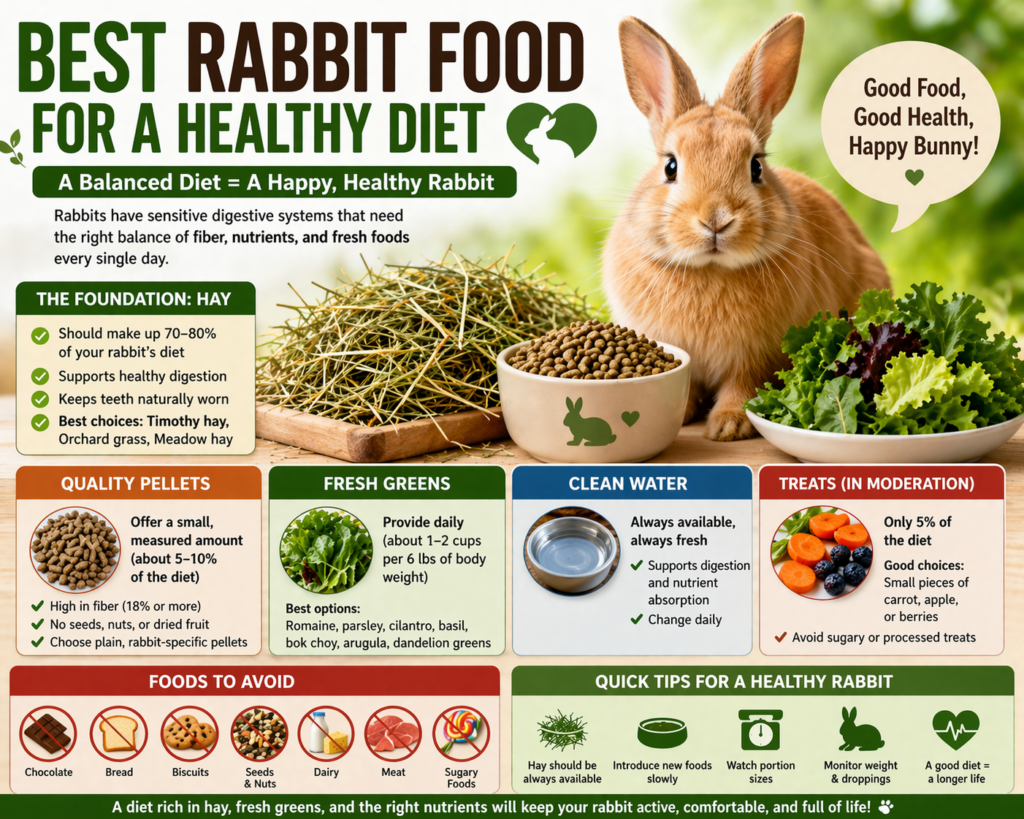
Best Rabbit Food for a Healthy Diet
Choosing the best rabbit food for a healthy diet is one of the most important things any rabbit owner can do. Rabbits may seem easy to feed, but their nutritional needs are very specific. A rabbit cannot thrive on random vegetables, too many pellets, or sugary treats. The best rabbit food for a healthy diet must support digestion, dental health, weight control, and overall wellbeing every single day.
Many people think rabbits mainly eat carrots, but that idea is incomplete. Carrots can be offered in small amounts, yet they should never be the foundation of daily feeding. The real answer to the question of the best rabbit food for a healthy diet begins with hay, then moves to measured pellets, fresh leafy greens, clean water, and only occasional treats. When those parts are balanced correctly, rabbits are more likely to stay active, alert, and healthy.
A poor feeding routine can lead to serious problems. Rabbits with the wrong diet may develop digestive upset, obesity, dental overgrowth, dull coats, and reduced energy. That is why understanding the best rabbit food for a healthy diet matters so much. This guide explains what rabbits should eat, how often they should eat, which foods should be limited, and how to build a practical feeding routine that supports long-term health.
Why the Best Rabbit Food for a Healthy Diet Matters
A rabbit’s digestive system depends heavily on fiber. Unlike some pets, rabbits need food moving through their gut throughout the day. If they do not eat enough fiber, digestion can slow down, and that can quickly become dangerous. This is one of the main reasons the best rabbit food for a healthy diet is always built around high-fiber foods rather than rich snacks or processed treats.
The best rabbit food for a healthy diet also supports dental health. Rabbit teeth grow continuously for life, so they need regular chewing to wear them down. Hay plays a major role here. Without enough hay, teeth may become overgrown, which can make eating painful and reduce appetite. A healthy rabbit diet is therefore not just about nutrition. It is also about natural chewing behavior and proper tooth wear.
Weight management is another key reason to focus on the best rabbit food for a healthy diet. Rabbits that eat too many pellets or sugary extras can gain weight quickly. An overweight rabbit may become less active, struggle to groom properly, and experience lower overall comfort. Proper feeding helps prevent these problems before they begin.
What Makes the Best Rabbit Food for a Healthy Diet?
The best rabbit food for a healthy diet is not one single product. It is a feeding plan made up of several essential parts. In most cases, a rabbit’s diet should include:
- unlimited hay
- a measured amount of quality pellets
- fresh leafy greens
- clean water at all times
- very limited treats
This simple structure forms the foundation of the best rabbit food for a healthy diet. Hay should always come first. Pellets should support the diet, not dominate it. Greens add variety and nutrients. Water keeps digestion working properly. Treats should stay minimal.
A healthy rabbit diet should be:
- high in fiber
- low in unnecessary sugar
- moderate in calories
- rich in natural plant-based nutrition
- suitable for the rabbit’s age and condition
When owners understand these principles, it becomes much easier to choose the best rabbit food for a healthy diet and avoid the common mistakes that lead to poor health.
Hay Is the Foundation of the Best Rabbit Food for a Healthy Diet
Hay is the most important part of a rabbit’s daily food intake. In fact, it should make up the majority of the diet. If you want to build the best rabbit food for a healthy diet, start with hay and make sure it is always available.
For adult rabbits, grass hays are usually the best option. Common choices include:
- Timothy hay
- orchard grass
- meadow hay
- oat hay
These are excellent because they provide the fiber needed for healthy digestion and healthy teeth. Fresh hay encourages constant chewing, which helps prevent dental issues and keeps the digestive system moving.
The best rabbit food for a healthy diet depends heavily on hay quality as well as hay quantity. Fresh, fragrant, dry hay is more appealing than dusty or stale hay. If hay is poor in quality, rabbits may eat less of it, and that can weaken the whole diet.
What About Alfalfa Hay?
Alfalfa is richer in calcium and protein than grass hay. That makes it useful for baby rabbits and young growing rabbits, but not usually ideal as the main hay for healthy adults. For most adult rabbits, the best rabbit food for a healthy diet is based on grass hay rather than alfalfa.
Pellets and the Best Rabbit Food for a Healthy Diet
Pellets can be helpful, but they are often overfed. One of the most common mistakes rabbit owners make is giving too many pellets. Rabbits like them, so it is easy to assume they should have more. However, too many pellets can reduce hay intake, and once hay consumption goes down, the overall quality of the diet goes down too.
The best rabbit food for a healthy diet includes pellets in controlled amounts. Good pellets should be plain, high in fiber, and made specifically for rabbits. They should not contain colorful bits, seeds, dried fruit, or sugary extras.
Avoid muesli-style rabbit foods. These are often marketed attractively, but rabbits tend to eat only the tastiest parts and leave the healthier parts behind. That leads to selective feeding and poor balance. A simple pellet is usually much better than a mixed formula when building the best rabbit food for a healthy diet.
Pellets should be measured according to the rabbit’s size, age, and body condition. They should never replace hay.
Fresh Greens in the Best Rabbit Food for a Healthy Diet
Fresh vegetables are another important part of the best rabbit food for a healthy diet. They add variety, moisture, and useful nutrients. The best vegetables for rabbits are usually leafy greens rather than sugary vegetables.
Safe leafy greens often include:
- romaine lettuce
- green leaf lettuce
- red leaf lettuce
- cilantro
- parsley
- basil
- dill
- mint
- bok choy
- arugula
- dandelion greens
A variety of greens is usually better than feeding the same single green every day. Rotating safe vegetables helps make meals more interesting and may support broader nutrition. This is one more reason the best rabbit food for a healthy diet is about balance rather than one single food item.
Some vegetables can also be fed in smaller amounts, such as cucumber, zucchini, celery, and bell pepper. These can be useful additions, but they should not replace hay or become the main part of the diet.
Are Carrots Part of the Best Rabbit Food for a Healthy Diet?
Carrots can be given, but only in moderation. Although rabbits enjoy them, carrots contain more sugar than leafy greens. That means they should be treated more like an occasional extra than a daily staple. The best rabbit food for a healthy diet keeps sweeter vegetables limited.
Water Is Essential
No rabbit diet is complete without fresh, clean water. Hydration is vital for digestion, especially when the diet is rich in fiber. The best rabbit food for a healthy diet always includes constant access to water that is clean and refreshed daily.
Some rabbits prefer bowls, while others use bottles. Many owners find that bowls encourage more natural drinking, but either method can work as long as the rabbit drinks well. Water containers should be cleaned regularly, because dirty water can discourage drinking and affect health.
Best Rabbit Food for a Healthy Diet by Life Stage
The best rabbit food for a healthy diet is not exactly the same for every rabbit. Age and health status matter.
Baby Rabbits
Young rabbits need more nutrients for growth. In this stage, the best rabbit food for a healthy diet may include alfalfa hay and pellets made for young rabbits. Fresh greens should be introduced slowly and carefully.
Adult Rabbits
For healthy adults, the best rabbit food for a healthy diet usually means unlimited grass hay, measured pellets, fresh greens, and plenty of water.
Senior Rabbits
Older rabbits may need adjustments depending on their weight, teeth, and appetite. Some senior rabbits lose condition and need closer monitoring. Others become less active and need tighter portion control. For senior pets, the best rabbit food for a healthy diet should be adjusted with care.
Foods to Avoid
Building the best rabbit food for a healthy diet also means knowing which foods should be avoided. Rabbits should not eat processed human foods, sugary snacks, or inappropriate pet treats.
Avoid feeding:
- chocolate
- bread
- biscuits
- crackers
- cereal
- dairy products
- meat
- nuts and seeds
- yogurt drops
- processed snacks
Large amounts of fruit should also be avoided because fruit is high in sugar. Small pieces can be given as occasional treats, but fruit should never become a major part of the best rabbit food for a healthy diet.
Iceberg lettuce is another food many owners ask about. It is not the most useful choice because it offers less nutritional value than darker leafy greens, so it is usually better to choose more nutrient-rich options.
Common Mistakes That Ruin the Best Rabbit Food for a Healthy Diet
Even caring owners sometimes make feeding mistakes that affect their rabbit’s health.
Too Many Pellets
This is one of the most common issues. Too many pellets reduce hay intake and upset the balance of the diet.
Not Enough Hay
The best rabbit food for a healthy diet always starts with unlimited hay. If hay is restricted, digestion and dental health may suffer.
Too Many Treats
Fruit, carrots, and commercial rabbit treats are often overused. Too much sugar can weaken an otherwise good diet.
Mixed Commercial Foods
Colorful mixes with seeds and dried fruit often look appealing to humans, but they are usually a poor choice for rabbits.
Sudden Diet Changes
Rabbits have sensitive digestive systems. New foods should be introduced gradually.
A Simple Daily Feeding Routine
A practical routine makes it easier to maintain the best rabbit food for a healthy diet.
Morning
- refill fresh hay
- provide measured pellets
- check water
Evening
- offer leafy greens
- top up hay again
- refresh water
Occasionally
- offer a very small piece of carrot or fruit as a treat
This type of routine works well because it keeps fiber available at all times while adding structure to the rest of the diet.
Signs the Best Rabbit Food for a Healthy Diet Is Working
A rabbit on a proper diet often shows clear signs of good health. Positive signs include:
- normal appetite
- healthy droppings
- active behavior
- a clean coat
- regular hay chewing
- stable body weight
If a rabbit stops eating, produces fewer droppings, or seems lethargic, that should never be ignored. Rabbits can become seriously unwell quite quickly when digestion slows.
Final Thoughts
The best rabbit food for a healthy diet is built on simplicity and consistency. Hay should always be the main food. Pellets should be plain and measured. Fresh leafy greens should provide variety and nutrients. Water should always be available. Treats should stay small and occasional.
When owners focus on these basics, they create a strong foundation for long-term rabbit health. The best rabbit food for a healthy diet supports digestion, dental wear, weight control, and everyday comfort. It also helps reduce the risk of many common health problems linked to poor feeding habits.
In the end, the best rabbit food for a healthy diet is the one that matches a rabbit’s natural needs and supports a long, healthy, and active life.
FAQs
What is the best rabbit food for a healthy diet?
The best rabbit food for a healthy diet usually includes unlimited hay, measured pellets, fresh leafy greens, and clean water at all times.
Is hay really the most important food for rabbits?
Yes. Hay is the foundation of the diet because it supports digestion and dental health.
Can rabbits eat pellets only?
No. Pellets alone are not enough. Rabbits need large amounts of hay every day.
Are carrots healthy for rabbits?
Carrots can be given in small amounts, but they should not be a major daily food.
How often should rabbits get fresh greens?
Most adult rabbits can have fresh leafy greens daily as part of a balanced feeding routine.