Introduction: How to Choose Food for Allergic Dogs
As a dog owner, you want your furry friend to be healthy and comfortable, but if your dog has food allergies, finding the right food can be challenging. How to choose food for allergic dogs is a question that many pet owners face, as food allergies can cause a variety of symptoms ranging from itchy skin and digestive problems to ear infections and more.
Food allergies in dogs are becoming more prevalent, and understanding how to choose food for allergic dogs is key to managing your dog’s health. Whether your dog is allergic to certain proteins, grains, or other ingredients, this guide will help you navigate through your options, identify the best foods, and find relief for your dog. By the end of this article, you will know exactly how to choose food for allergic dogs to ensure they get the proper nutrition without triggering allergies.
What Are Food Allergies in Dogs?
Before discussing how to choose food for allergic dogs, it’s important to understand what food allergies are and how they affect your dog. A food allergy occurs when a dog’s immune system mistakenly identifies a specific ingredient as harmful, triggering an allergic reaction.
Common allergens for dogs include:
- Proteins (beef, chicken, lamb)
- Grains (wheat, corn, soy)
- Dairy
- Artificial additives
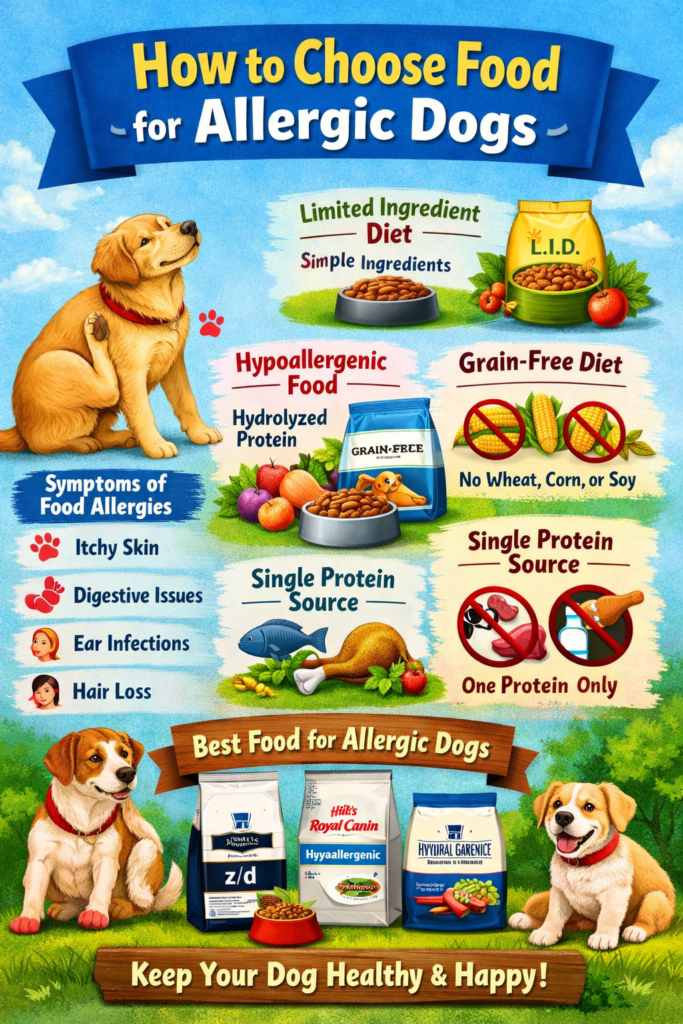
When a dog with a food allergy consumes an allergen, their immune system releases histamines and other chemicals, leading to a variety of symptoms, such as:
- Itchy skin and scratching
- Digestive issues (vomiting, diarrhea)
- Ear infections
- Hair loss or bald spots
- Swollen paws or licking of the paws
These reactions can cause discomfort for your dog, so understanding how to choose food for allergic dogs is crucial to alleviate these symptoms and provide relief.
How to Identify Food Allergies in Dogs
The first step in how to choose food for allergic dogs is identifying the ingredients your dog is allergic to. This can be challenging because symptoms of food allergies often resemble those of other conditions, such as flea allergies, infections, or environmental allergies. Here’s how you can identify food allergies in your dog:
- Monitor Symptoms: Keep track of any symptoms your dog exhibits, such as itching, vomiting, or diarrhea, especially after meals. If the symptoms persist or worsen, it could indicate a food allergy.
- Elimination Diet: An elimination diet is one of the most effective ways to pinpoint food allergies. This involves feeding your dog a limited ingredient diet with a novel protein (like venison or duck) and a simple carbohydrate (like sweet potatoes). Gradually reintroduce other foods to see which ingredient causes a reaction.
- Veterinary Tests: Consult your veterinarian for allergy testing. A blood test or skin test can help determine which ingredients your dog is allergic to.
Once you’ve identified the allergens, you can move forward with selecting food that avoids these ingredients.
How to Choose Food for Allergic Dogs
Now that we’ve covered what food allergies are and how to identify them, let’s dive into how to choose food for allergic dogs. When selecting food for a dog with allergies, the key is to find a formula that eliminates known allergens while still providing the necessary nutrition. Here are the main factors to consider:
1. Limited Ingredient Diet (LID)
One of the best ways to help your dog with food allergies is by choosing a Limited Ingredient Diet (LID). LID foods contain fewer ingredients, which helps reduce the chances of triggering an allergic reaction. LID foods often feature a single protein source (such as lamb, venison, or fish) and simple carbohydrates like sweet potatoes or peas.
- Benefits: LID foods help you identify potential allergens and simplify your dog’s diet.
- What to Look For: Look for dog foods that list a single, high-quality protein as the first ingredient and avoid fillers like corn, soy, and wheat.
2. Hypoallergenic Dog Food
Hypoallergenic dog food is designed for dogs with food allergies. These foods often feature hydrolyzed proteins, which are proteins that have been broken down into smaller molecules, making them less likely to cause an allergic reaction. Many hypoallergenic dog foods are prescription diets that your veterinarian can recommend.
- Benefits: Hydrolyzed protein is less likely to trigger an immune response, making it an excellent choice for dogs with severe allergies.
- What to Look For: Choose hypoallergenic food that lists hydrolyzed protein or hydrolyzed chicken or hydrolyzed fish as the first ingredient.
3. Grain-Free Dog Food
Grains like wheat, corn, and soy are common allergens for many dogs, so opting for grain-free dog food can help alleviate allergic reactions. Grain-free dog foods typically use alternative carbohydrates such as sweet potatoes, potatoes, lentils, or peas. These options are often easier on the digestive system and less likely to cause allergies.
- Benefits: Grain-free foods eliminate common allergens that affect dogs with sensitivities to grains.
- What to Look For: Look for grain-free options that use whole foods like sweet potatoes and peas as the primary carbohydrates.
4. Single Protein Source Diet
A single protein source diet can be beneficial for allergic dogs, as it helps minimize the number of proteins your dog consumes. Many dogs with food allergies are sensitive to multiple protein sources, so choosing a dog food that contains just one protein (like duck, lamb, or venison) can reduce the risk of triggering an allergic reaction.
- Benefits: Fewer proteins mean fewer chances of your dog reacting to one.
- What to Look For: Choose a food that lists a single protein source, such as duck or venison, and avoid foods with multiple protein sources.
5. Avoid Common Allergens (Beef, Chicken, Dairy, Grains)
To address how to choose food for allergic dogs, it’s crucial to eliminate known allergens from your dog’s diet. Common allergens include:
- Beef
- Chicken
- Dairy
- Wheat
- Corn
- Soy
If you’ve identified that your dog has an allergy to any of these ingredients, make sure to avoid them when selecting food. Instead, look for alternative protein sources like lamb, fish, or turkey, and choose carbohydrate sources like sweet potatoes, peas, and quinoa.
- Benefits: Avoiding common allergens can significantly reduce allergic reactions and improve your dog’s health.
- What to Look For: Always check the ingredient list and avoid foods containing beef, chicken, corn, or soy.
Best Dog Food Brands for Allergic Dogs
When selecting the best food for allergic dogs, it’s essential to choose brands that prioritize quality ingredients and allergy-friendly formulas. Here are some of the best dog food brands for dogs with food allergies:
1. Hill’s Prescription Diet
Hill’s offers a range of prescription diets designed for dogs with food allergies, including options with hydrolyzed protein and limited ingredients. Their Hill’s Prescription Diet z/d is formulated to support dogs with food sensitivities.
2. Royal Canin Veterinary Diet
Royal Canin’s Veterinary Diet line includes formulas for dogs with food allergies, such as Hydrolyzed Protein and Limited Ingredient Diets. Their products are specifically designed to improve digestive health and prevent allergic reactions.
3. Wellness Simple
Wellness Simple offers a variety of limited ingredient diets (LID) that are great for allergic dogs. These formulas include a single animal protein and easy-to-digest carbohydrates, making them an excellent option for dogs with food allergies.
4. Natural Balance L.I.D. (Limited Ingredient Diets)
Natural Balance L.I.D. is another great choice for allergic dogs. These dog foods contain a single protein source and a limited number of ingredients, making it easier to avoid allergens and help your dog feel better.
Conclusion: How to Choose Food for Allergic Dogs
Choosing the right food for your allergic dog is essential to managing their allergies and ensuring they stay healthy. By selecting limited ingredient diets, hypoallergenic foods, and grain-free options, you can help reduce allergic reactions and provide your dog with the nutrition they need.
When determining how to choose food for allergic dogs, always consult your veterinarian to ensure you’re choosing the best option for your pet’s specific needs. With the right food, your dog can live a comfortable, healthy life free from food allergies and sensitivities.
Call to Action:
If this guide helped you understand how to choose food for allergic dogs, feel free to share it with other dog owners who may be struggling with food allergies in their pets. For more tips on dog health, food, and care, be sure to subscribe to our blog and get the latest updates.
SEO Keywords:
- How to Choose Food for Allergic Dogs
- Best Food for Allergic Dogs
- Dog Food for Allergies
- Hypoallergenic Dog Food
- Grain-Free Dog Food
- Limited Ingredient Diets for Dogs
- Single Protein Dog Food
- Food Allergies in Dogs
- Best Allergy Relief Dog Food